




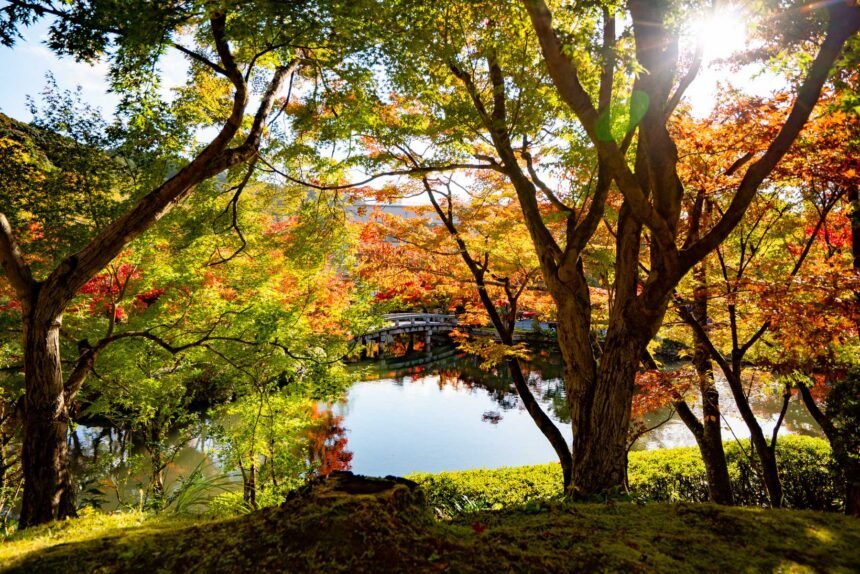
My husband and I have been to Japan in cherry blossom season, in the sticky heat of July, and once in the dead quiet of January. Ask me which trip I’d repeat tomorrow and I won’t hesitate. November. The autumn colors here, the ones the Japanese call momiji, undid me in a way the sakura never quite did. Sakura is a week of pink held together with tape and prayer. Momiji is a slow burn that rolls down the length of the country for six weeks, and if you time your cities right, you can chase peak red from one temple to the next like you’re following a lit fuse.
That last part is the whole game. Japan in November is not one season. It’s a moving target, and where the color is beautiful in the third week is often bare by the fourth. So this is the guide I wish someone had handed me. Week by week, city by city, with the honest downsides included.
How the color actually moves
Momiji sweeps north to south and high to low. It starts in Hokkaido’s mountains in late September, works through Tohoku and the highlands in October, and doesn’t reach the big-city temples until November. The Japan Meteorological Corporation puts out an annual forecast every autumn, and I check it obsessively before we book flights. The pattern holds year to year even when the exact dates shift a few days.
Here’s the rule of thumb that has never failed us. Elevation buys you time. If you land and the low-lying temples are still stubbornly green, go up. Nikko, the Fuji Five Lakes, Mount Takao. The color is always a week or two ahead up there. And when the mountains have already dropped their leaves, the city gardens are just getting started. You are never actually too early or too late in Japan in November. You just have to move.
Early November (the 1st through the 10th): go up high
The city temples are not ready yet. I know that’s not what you want to hear if your flight lands on the 3rd, but it’s true, and fighting it just gets you a lot of green maples and a sunk feeling. Point yourself at altitude instead.
Nikko and Lake Chuzenji. This is where you want to be the first week of the month. The forested slopes around Lake Chuzenji and Kegon Falls tend to peak roughly October 18 through the first of November, so early November catches the tail end at the lake and often full color a little lower down toward the shrines. Nikko is a doable day trip from Tokyo, though I’d argue it deserves an overnight. The Toshogu shrine complex under color is a lot.
The Fuji Five Lakes. Kawaguchiko runs its Momiji Festival across the whole month, but the maples along the famous Momiji Corridor, that short walkway of a hundred-plus maple trees on the north shore, tend to blaze hardest around November 10 to 20. Go early in that window and you get Mount Fuji floating behind red maples with the crowds still manageable. They light the corridor in the evenings, and the reflection on the still water is the postcard shot for a reason. Fair warning though. Fuji hides. We waited two mornings for the mountain to show itself and it only really cleared on the second. Build in a buffer day if this view is your reason for coming.
Mid November (the 11th through the 20th): Tokyo turns
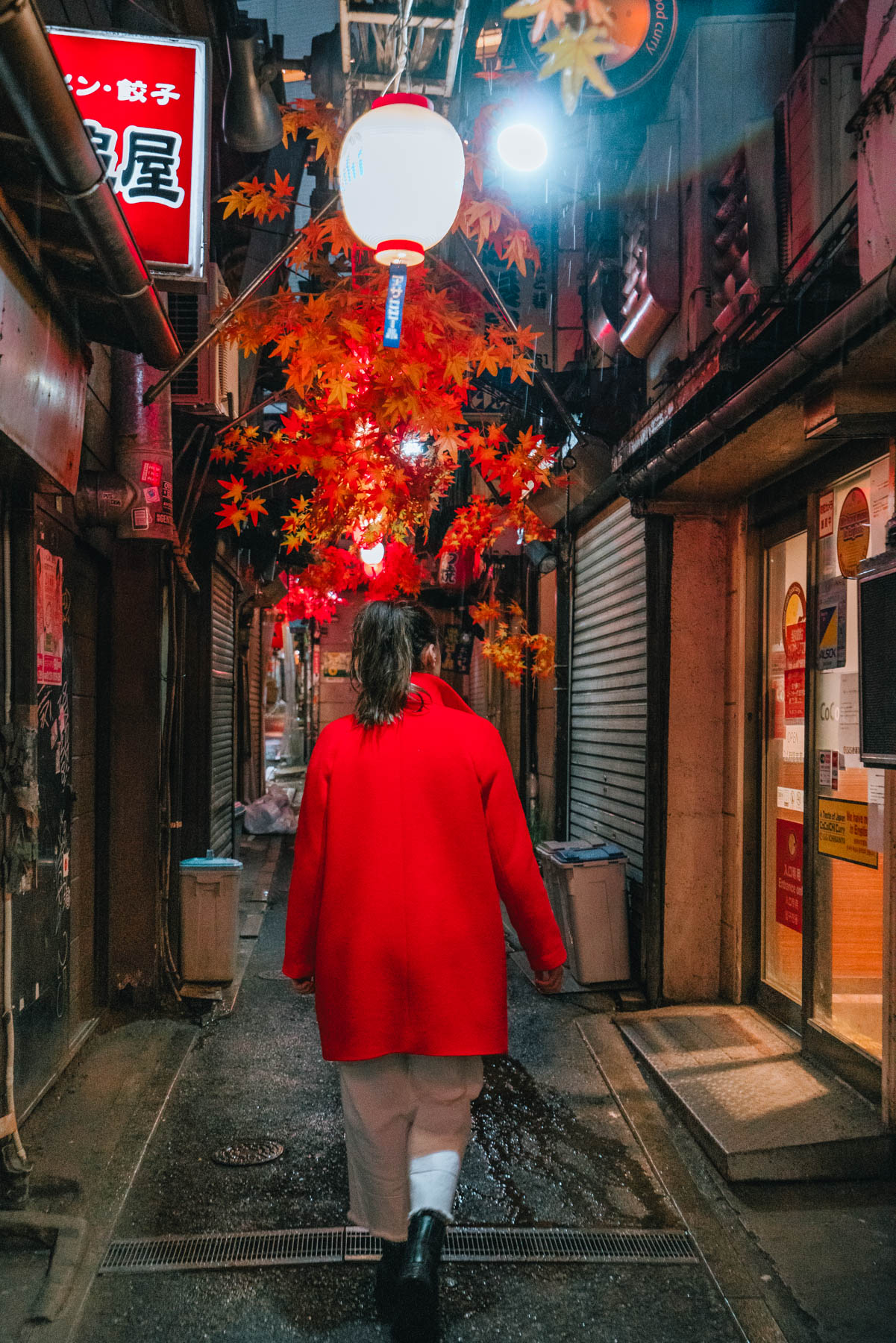
Mount Takao. This is the one I’d send you to first if you’re in Tokyo mid-month. It’s a proper little mountain in the western suburbs, an easy train ride out, and the whole slope goes orange and red usually around the third week. The temperate weather makes it the most pleasant hike of the year, and there’s a cable car if the climb isn’t your thing. It gets busy on weekends. Go on a weekday morning and it’s a different, quieter mountain.
Central Tokyo’s marquee spots are still warming up mid-month, but they’re close. If your dates fall here, you’re in a beautiful in-between. Lower gardens starting to turn, mountains still holding. Which brings me to the thing nobody tells you about Tokyo in autumn. It’s a ginkgo city as much as a maple city.
Late November (the 21st through the 30th): the whole thing peaks
This is the week. If you can only come for a slice of November, come for the last ten days. Everything lines up.
Tokyo’s ginkgo gold. The Meiji Jingu Gaien ginkgo avenue, that famous corridor of trimmed trees, turns brilliant yellow and peaks roughly November 22 to 30. They light it in the evenings, generally from late afternoon into the early evening. It’s the most photographed golden tunnel in the country and it earns it. Rikugien, the old strolling garden, runs its autumn illumination in the same stretch, late November into the first week of December, and the reflection of lit maples on the pond is worth the entry fee and the queue. Both get crowded. Both are worth it.
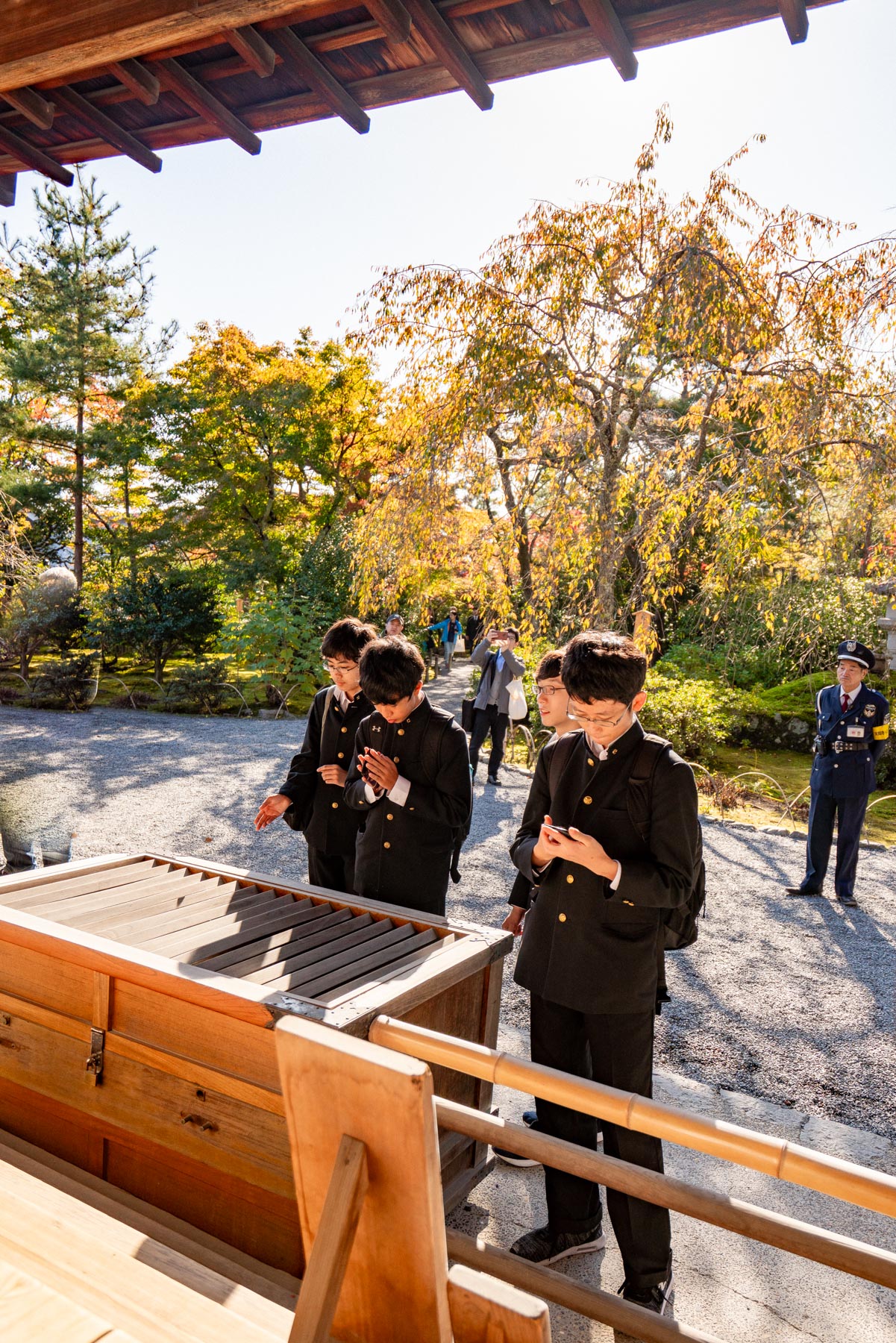
Kyoto, finally. Kyoto is the last domino and it’s the best one. The city’s famous foliage spots hit their peak from mid to late November, often lasting into the first days of December. If I had to plant a flag on one date for planning, I’d say the last week of November is your safest bet for Kyoto at full flame. We’ve been off by a few days in both directions across our visits, which is exactly why you build a chaseable itinerary instead of betting the trip on one afternoon.
Where to stand in Kyoto
Kyoto has more good maple than any human can see in one trip, so I’ll give you the ones we actually loved and the one I’d tell you to skip.
Eikando. Officially Zenrin-ji, but everyone calls it Eikando of the maples for a reason. Roughly three thousand maple trees, a pond that mirrors all of them, and an evening illumination that runs mid-November to early December in the neighborhood of 5:30 to 8:30 p.m. If you see one lit-up temple in your life, make it this one. The red here is almost too much, like someone turned the saturation dial past the safe zone.
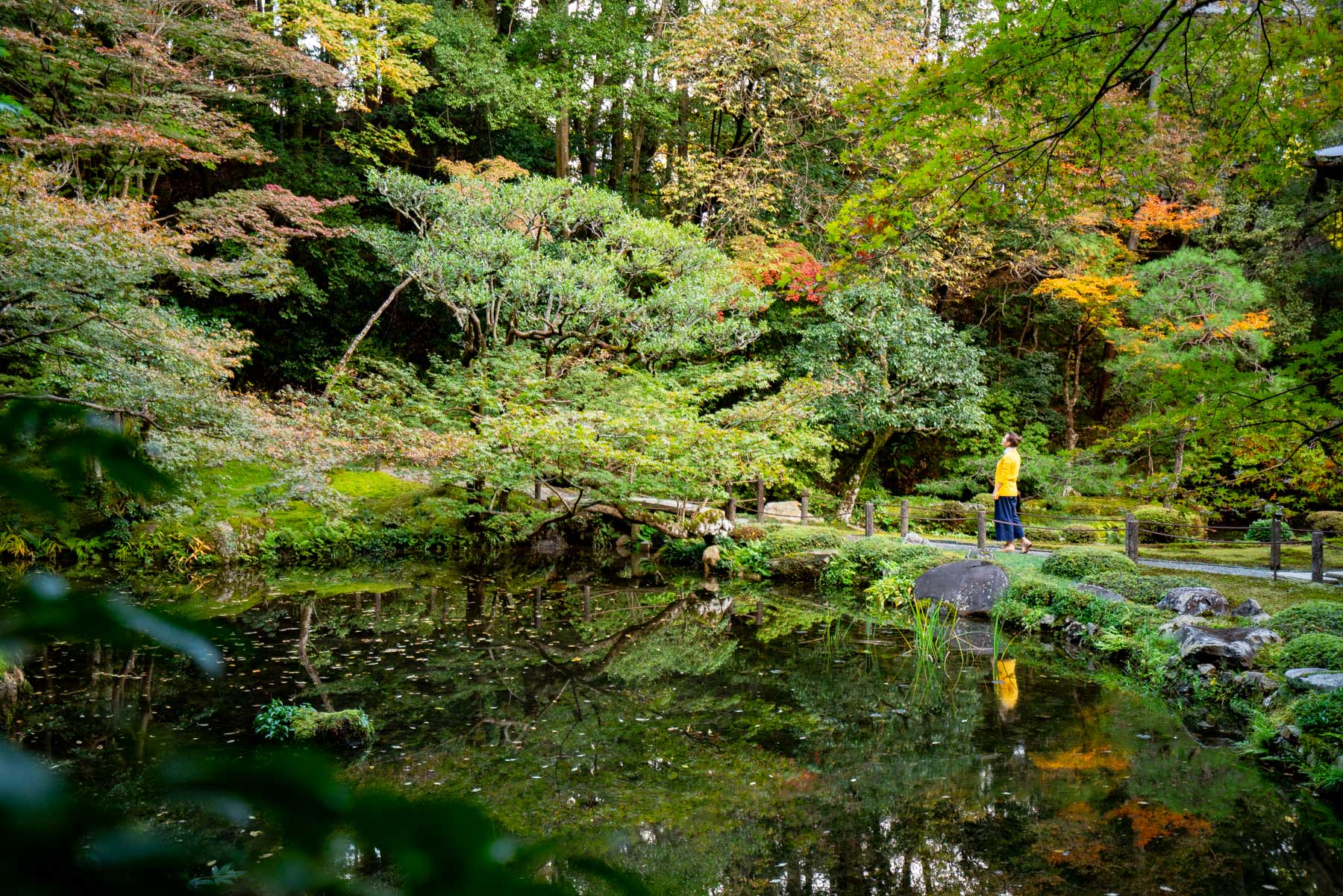
Nanzen-ji. A few minutes’ walk from Eikando and quieter, with that great brick aqueduct running through the grounds and maples spilling over everything. We came here to escape the Eikando crush and ended up staying longer than we planned. The Philosopher’s Path connects this whole eastern stretch, so you can string several temples together on foot with color the entire way.
Tofukuji. The Tsutenkyo Bridge view over a valley of maples is one of the most famous images in all of Japan. It is also, at peak, a genuine crush of people, and they cap the numbers on the bridge. Go right at opening or don’t bother fighting for the railing. Beautiful. Just know what you’re signing up for.
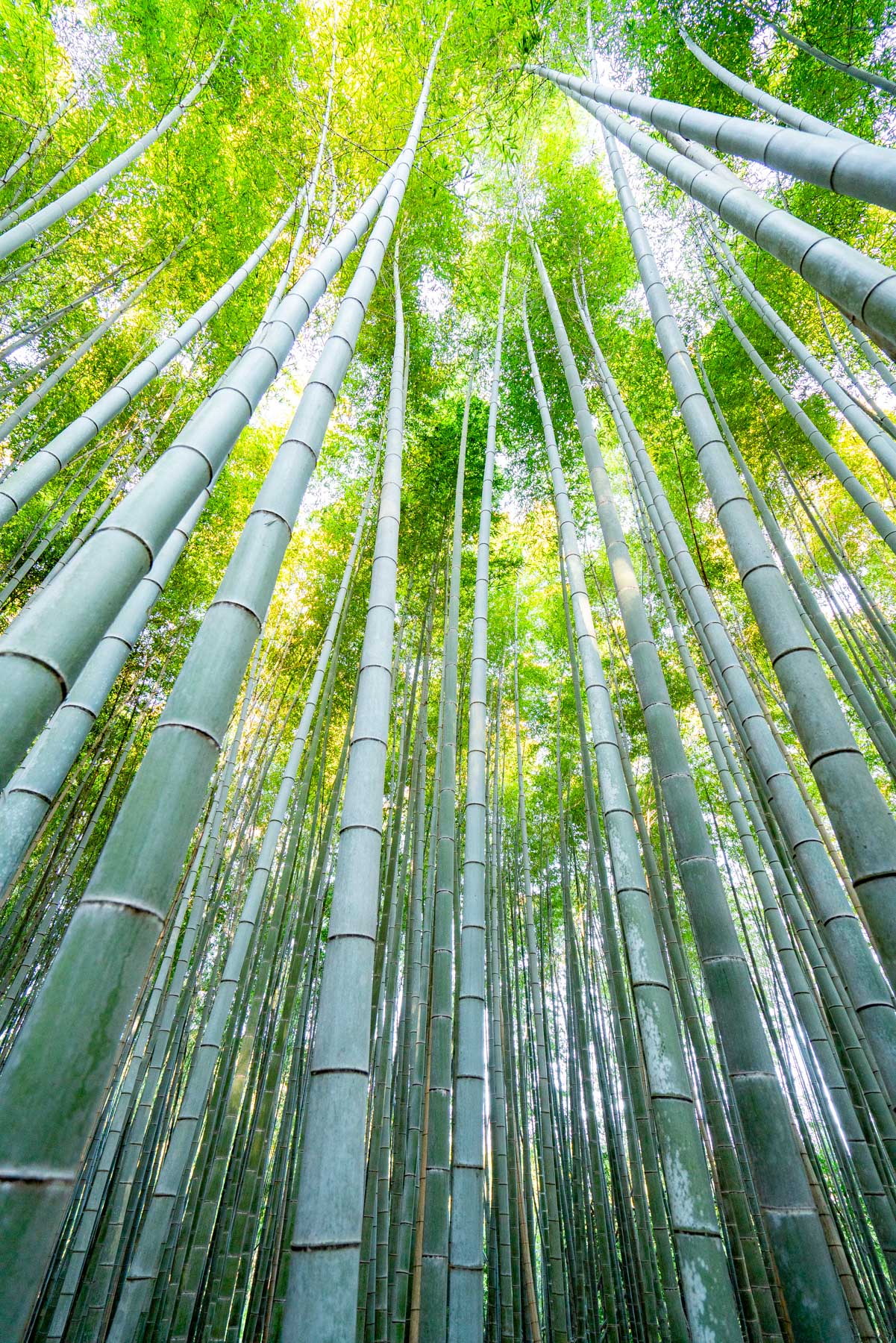
Arashiyama. The bamboo grove gets all the attention, and it’s lovely, but Arashiyama in late November is really about the maples on the surrounding hills and along the river. If you want the deep dive on this district and the rest of the city’s autumn corners, I put everything into my full guide to Kyoto in the fall, including the temples that didn’t make the cut here.
Kamakura, if you have an extra day
Here’s the quiet trick for people whose trip runs into early December and who worry they’ve missed it. Kamakura peaks late. The maples at Engaku-ji, a one-minute walk from Kita-Kamakura station, usually hit their best from mid-November into early December, and the temple is often at full flush right when Kyoto is starting to fade. It’s an easy day trip from Tokyo. If your dates skew late, this is your safety net.
The weather, and the honest downside
November is, weather-wise, close to perfect. Kyoto daytime temperatures sit around 14 to 17°C, mid-50s to low 60s in Fahrenheit, with crisp mornings that drop toward 5 to 9°C. It’s the driest month in Kyoto, which means clear skies and that low golden light that makes red maples look lit from inside. Pack layers. A warm morning here becomes a cold evening the second the sun goes behind a temple wall, and we learned that one the hard way shivering through an Eikando light-up in a single fleece.
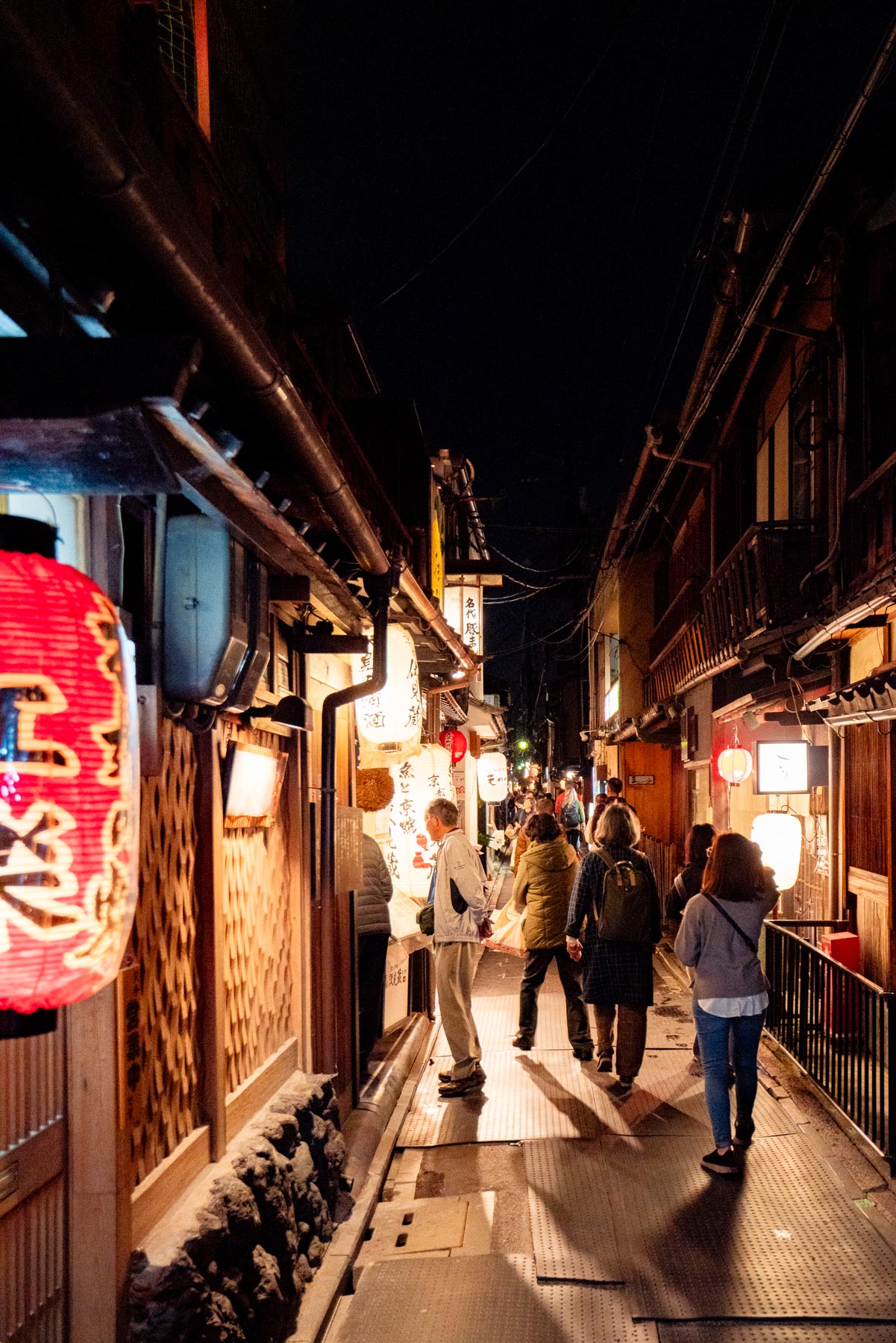
Now the part I have to be honest about. November is the single busiest tourist stretch in Japan, and it’s not close. The whole country knows the color is coming, the domestic travelers come out in force, and Kyoto in particular can feel oversubscribed in the last week of the month. Trains fill. The famous temples have lines. Hotels in Kyoto book out months ahead and prices climb accordingly. If you want the last week of November, and you should, book your lodging as early as you humanly can. This is not the trip you throw together six weeks out.
My workaround, and it genuinely helps, is to be early and be late in the day. The temples open early and the tour buses don’t. First light at Tofukuji or Eikando is a different, gentler place than the same spot at noon. And the evening illuminations, while popular, spread the crowd across a longer window than the daytime rush does. We saw our best color at hours most people were eating breakfast or dinner.
How to string it all together
If you’re building the classic Tokyo-to-Kyoto route in late November, the color will more or less move with you, which is the small miracle of this trip. Start in and around Tokyo while the ginkgo golds and the low gardens turn, run out to Takao or Nikko for the higher color, then take the train down to Kyoto for the grand finale as the Kansai temples reach their peak. It’s the standard Golden Route, and autumn is the season it was practically designed for.
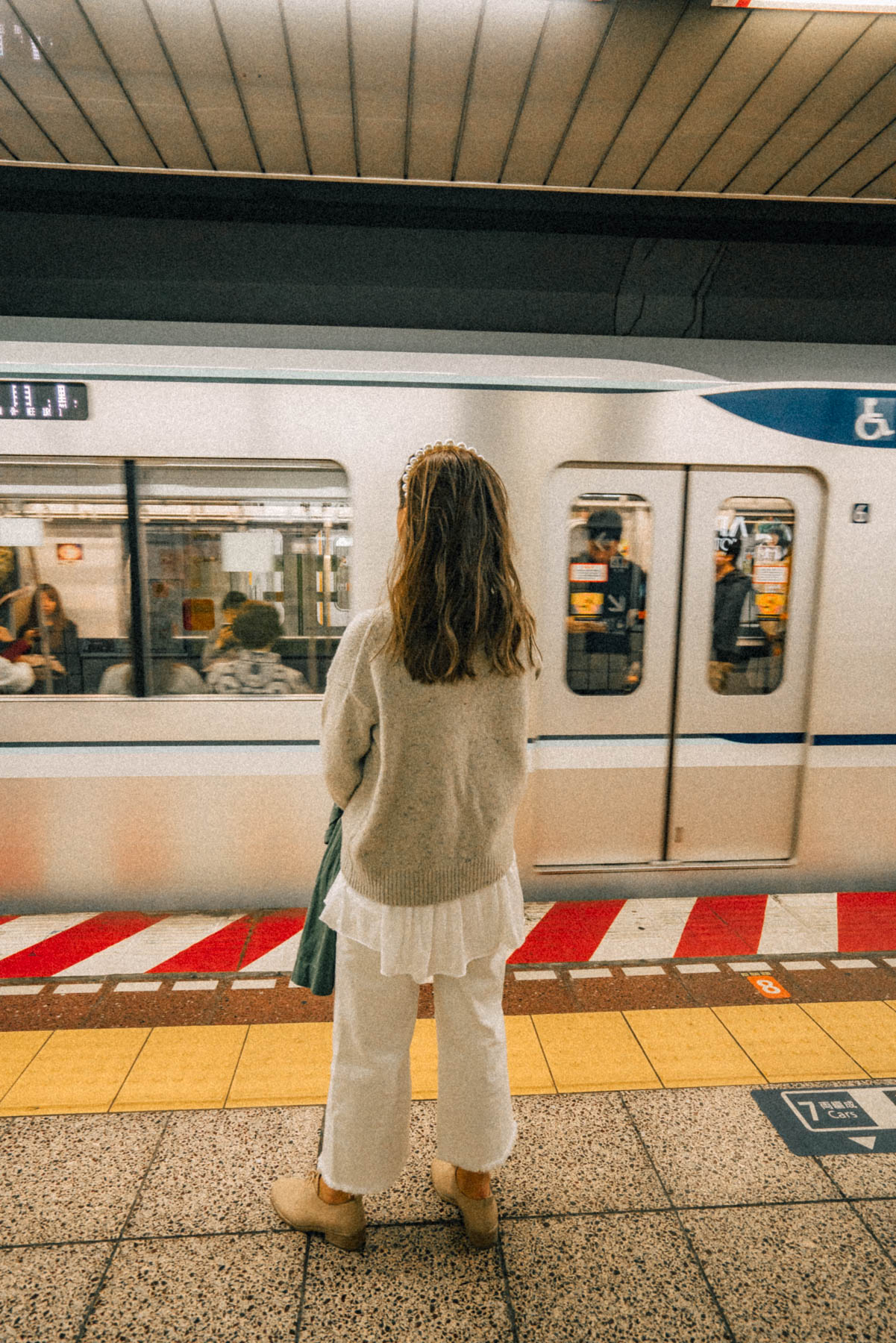
For the practical bones of a trip like this, how many days to give each city, what it actually costs, which rail passes are worth it, I laid the whole thing out in our 10-day Japan itinerary and expense report. It’s built around the Tokyo-Kyoto spine, so it slots right into an autumn trip. And if you’re still deciding how to split your time between the two cities, our honest Kyoto vs Tokyo comparison gets into which one deserves more of your days. My short answer for November. Give Kyoto the extra night. The temples are the whole point of coming this month, and you’ll want the slow mornings.
One more thing worth reading before you commit to dates. Autumn is my favorite window in the capital but it’s a genuinely four-season city, and our breakdown of the best time to visit Tokyo walks through what each one actually feels like on the ground.
Frequently Asked Questions
The last ten days of November are the safest bet for full color in the major cities. Kyoto’s famous temples typically peak from mid to late November into early December, Tokyo’s ginkgo and lower gardens turn around November 22 to 30, and higher spots like the Fuji Five Lakes and Mount Takao peak earlier, roughly November 10 to 20.
It’s too early for the low-lying city temples in Tokyo and Kyoto, but it’s perfect for higher elevations. Head to Nikko and Lake Chuzenji, which often peak late October into the first of November, or the Fuji Five Lakes. Elevation runs about one to two weeks ahead of the cities.
It’s cool, crisp and mostly dry. Kyoto daytime temperatures sit around 14 to 17°C, mid-50s to low 60s Fahrenheit, dropping to 5 to 9°C at night. November is Kyoto’s driest month, so you get clear skies and excellent light. Pack layers, because evenings turn cold quickly.
It’s arguably the best time, for the momiji autumn colors and the near-perfect weather. The trade-off is crowds. November is the busiest tourist stretch of the year, especially the final week in Kyoto, so book lodging months in advance and visit temples at opening or during evening illuminations to beat the rush.
Kyoto, for the sheer density of temple maple, but the two peak at slightly different times, so a Tokyo-to-Kyoto route in late November lets you catch color in both. Tokyo leans golden with its ginkgo avenues while Kyoto leans deep red with its temple maples.
Japan in November is the trip I recommend to people who tell me they only get to go once. Come for the last ten days if you can, book everything early, pack the warm layer you’ll be tempted to leave behind, and let the color pull you from one city to the next. It’s the closest thing to chasing a slow-moving fire, and I’d do it again in a heartbeat.
Cheers!
Antonina