




Before anything else. If you haven’t read our full honest experience visiting Egypt, please start there. Everything in this post builds on that experience. I’m not sugarcoating anything here, and I’m not reversing my position. I still wouldn’t go back. But the number one question I’ve received from hundreds of commenters is whether a guided tour would have changed our experience. The short answer? Absolutely. But it’s more complicated than that.
Of all the comments on our Egypt post, there’s one theme that comes up more than any other: “I went with a guide and had an amazing time!” or “You should have booked a guided tour!” And you know what? They’re right. The folks who traveled Egypt with a reputable guide had a completely different experience than we did. It’s barely the same trip.
And that’s exactly the problem. Because a country where the experience depends entirely on whether you’ve paid someone to run interference shouldn’t be marketed as a normal travel destination. But here we are, so let’s break down exactly what the difference looks like.
What Independent Travel in Egypt Actually Looks Like
Let me paint you a picture, because I feel like most Egypt travel guides skip this part entirely.


You leave your hotel. Within 30 seconds, someone approaches you. “Where are you from? Where are you going? Do you need a taxi? Do you want a tour?” You say no. They follow you. Another person joins. They’re shouting different prices, different services. You keep walking. They keep following. One grabs your bag to “help” you. You pull it back. Someone else calls out from across the street. A child runs up selling postcards. A man on a horse offers a ride. You haven’t even reached the entrance to the site yet.
This is not an exaggeration. This is a Tuesday in Luxor.
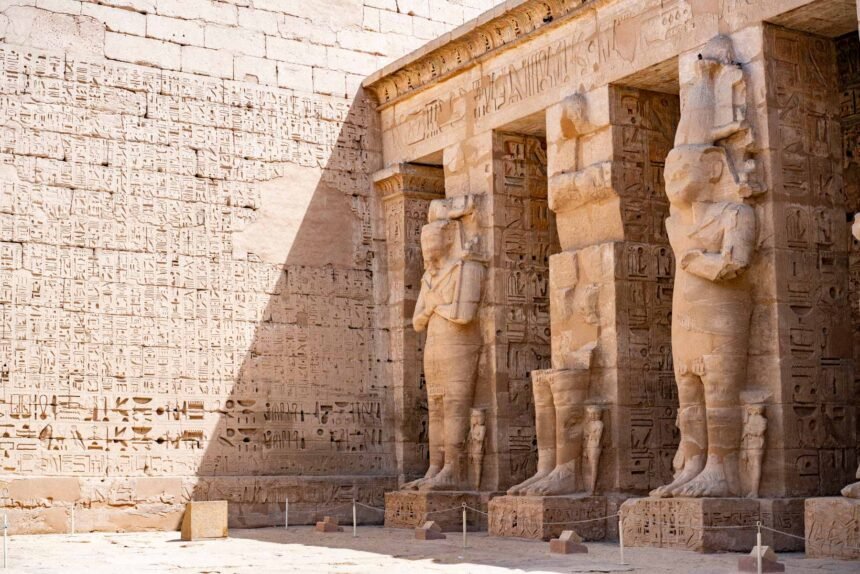
Once you’re inside the site, it gets better but not great. Guards approach you offering to unlock doors or let you take photos in restricted areas — for a tip, naturally. Other tourists’ guides are explaining things around you while you’re trying to piece together the history from your phone’s Wikipedia app. Vendors have somehow gotten inside the complex and are selling trinkets near the exits.
Then you leave and the gauntlet starts again in reverse. You’re exhausted, overstimulated, and you’ve spent more mental energy managing the chaos than actually absorbing the 3,000-year-old history you flew halfway around the world to see.
By day three of our trip, we were mostly hotel-bound because the exhaustion of navigating Egypt without a guide was too much. We couldn’t even take in the sites because we were constantly on guard, avoiding eye contact, clutching our bags, and saying “la shukran” on repeat. That’s not traveling. That’s surviving.

What Guided Travel in Egypt Looks Like
The first time we hired a guide through our hotel in Luxor, I immediately understood what everyone in the comments had been talking about.
People stopped approaching us. Not entirely, but the difference was maybe 80%. Our guide would walk slightly ahead, exchange a few words in Arabic with anyone who approached, and they’d back off. Just like that. No following, no grabbing, no aggressive sales pitches. It was like having an invisibility cloak, and after days of being hassled nonstop, the relief was overwhelming.
Beyond the buffer effect, having a guide meant we actually learned something. At Karnak Temple, our guide pointed out details we would have walked right past — specific hieroglyphics that told stories, architectural choices that revealed which pharaoh built which section, the astronomical alignment of certain chambers. She made the stones come alive in a way that Wikipedia on my phone never could.
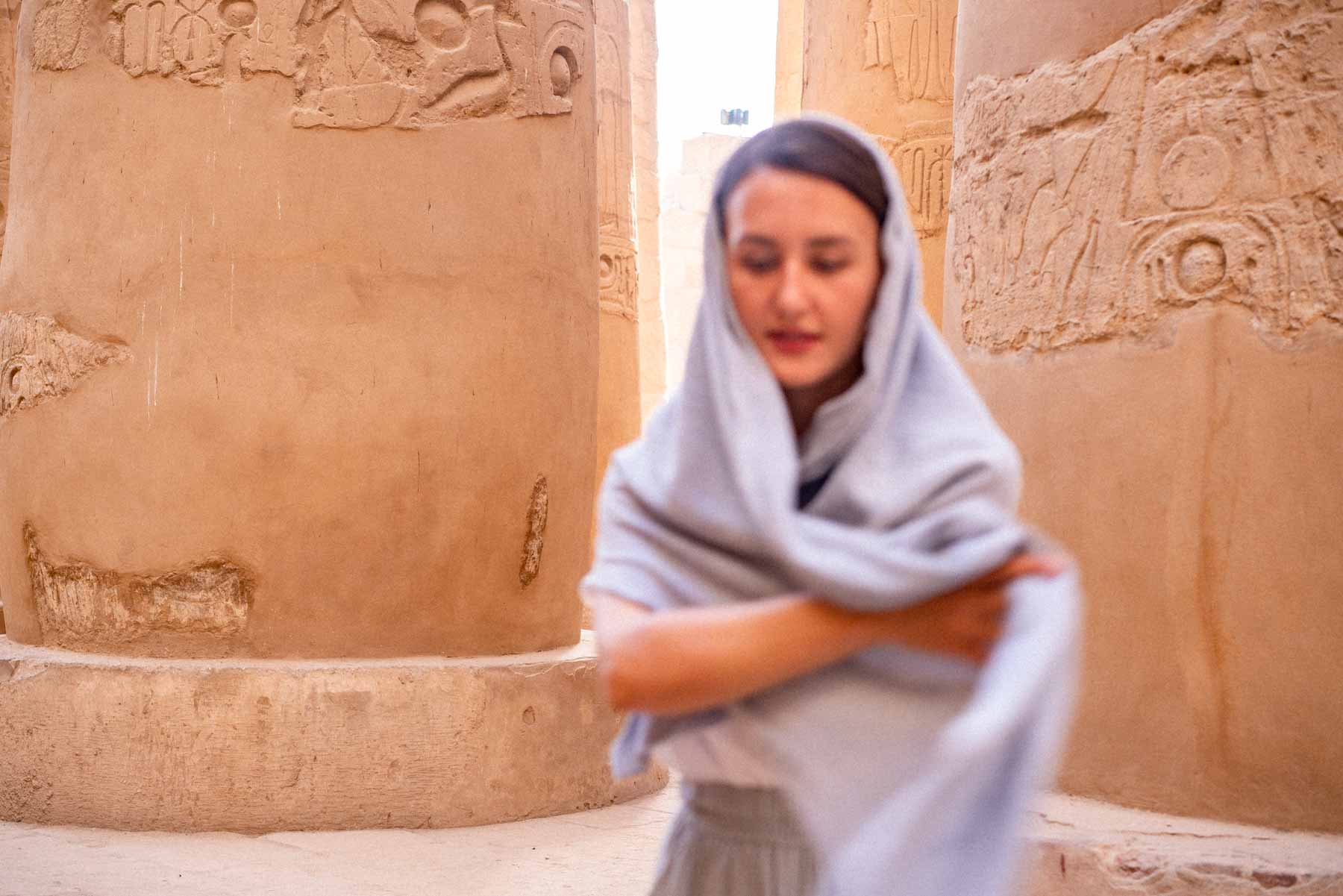
Our guide also handled all the logistics. She negotiated entrance fees, tipped the right people at the right times (so we weren’t ambushed by guards later), knew which areas were worth spending time in and which were tourist traps, and arranged our transportation. For the first time on the entire trip, we could actually relax and focus on the experience.
The difference between guided and independent travel in Egypt is the difference between watching a documentary about a war zone and standing in one. One is informative and manageable. The other is visceral and exhausting. They’re both technically the same place, but the experience could not be more different.

The Real Cost Comparison
Let’s talk numbers, because “just hire a guide” sounds expensive until you compare it to the alternative.
Independent travel costs (what we actually paid)
We “saved” money by not booking guided tours for the first few days. And by “saved,” I mean we paid less in tour fees but got absolutely rinsed in scam taxes. The camel ride that was supposed to be 200 Egyptian pounds per person ended up costing us triple that after the operators blocked us from leaving. Taxis that should have been 130 pounds were 250-350 after aggressive negotiation. The “free” street Egyptologist in Cairo eventually pressured us into a multi-day booking, then took us to commission-generating souvenir shops instead of sites.
Add up the scam premiums, the wasted time, and the experiences we couldn’t enjoy because we were too busy defending ourselves, and the “savings” of independent travel evaporate entirely.
Guided travel costs
We paid roughly $100 per person for half-day guided tours booked through our hotel. That included the guide, a driver, and temple entrance fees. For a full day tour, expect $150-200 per person. Some travelers book multi-day packages through companies like Intrepid Travel, G Adventures, or Egypt Tailor Made that handle everything — flights, hotels, guides, meals — for a flat rate.
Here’s the math that finally clicked for us: A half-day guided tour costs about $100 per person. Without a guide, we spent $100+ per day on scam premiums, inflated taxi fares, and vendor hassle — plus we couldn’t actually enjoy the sites. The guide isn’t an added expense. It’s the cost of actually experiencing what you came to see.
What Guides Can’t Fix
I want to be honest about this, because I don’t want you going to Egypt thinking a guide solves everything. It doesn’t. Here’s what a guide can’t change:
The souvenir shop stops. Every single guide we booked through hotels took us to some souvenir shop to show us how “real alabaster” or “real papyrus” was made. It’s a whole production — the shop keeper spends 20 minutes pulling out all the stops, which makes leaving empty-handed super awkward. You can ask to skip these stops in advance, but some guides get commission from the shops and will take you anyway.
The corruption at the sites. Guards will still approach you for tips, even with a guide present. Your guide may even tell you to give them a small tip to avoid trouble. The bribes-for-access system at temples and tombs is deeply embedded, and one guide can’t dismantle it.
The general atmosphere. A guide can shield you from the worst of the hassling, but they can’t change the fact that Cairo is chaotic, the streets are rough, and the poverty is visible everywhere. If you’re someone who is deeply affected by visible suffering, Egypt will be hard regardless of whether you have a guide.
Your feelings about the country. I had a guide for the second half of my trip and I still left Egypt feeling frustrated and sad. The guide made the sites infinitely more enjoyable, but the overall experience of being in Egypt — the corruption, the desperation, the feeling of being exploited at every turn — doesn’t go away because someone is managing it for you. It just becomes more bearable.


How to Find a Reputable Guide
This part is critical, because a bad guide in Egypt can be as problematic as no guide at all. Our first “guide” in Cairo was a street hustler posing as an Egyptologist who ultimately took us to souvenir shops. Here’s how to find the real thing:
Book through your hotel concierge. This was the most reliable method for us. Hotels have relationships with specific guides and drivers, and they have a vested interest in your satisfaction (because you’ll complain to them if something goes wrong).
Use established tour companies. Companies like Intrepid Travel, G Adventures, and Egypt Tailor Made have been operating in Egypt for years and have systems in place to manage the unique challenges. Read recent reviews specifically, not reviews from five years ago.
Never hire someone off the street. I don’t care how knowledgeable they seem. I don’t care how good their English is. I don’t care if they show you a laminated badge. If you didn’t book them in advance through a verified source, walk away. We learned this the hard way in Cairo and I refuse to let you make the same mistake.
Ask the right questions upfront. Does the price include all entrance fees? Tips for guards? Will there be stops at souvenir shops? What’s the cancellation policy? A legitimate guide will answer all of these directly. A hustler will dodge.
The Bottom Line
Traveling Egypt with a guide and without a guide are two completely different experiences. I am not exaggerating when I say they’re barely the same trip. Without a guide, we were miserable, stressed, and couldn’t enjoy the sites we’d traveled thousands of miles to see. With a guide, we actually got to experience the ancient history, learn from a knowledgeable local, and feel something close to safe.
If you are going to Egypt, book a guide. From day one. For every single outing. Don’t make our mistake of trying to do it independently for the first few days. The “savings” aren’t real, the experiences you’ll miss are, and the stress will color your entire memory of the trip.
Will a guide make Egypt a perfect vacation? No. Will it make Egypt a tolerable, and sometimes even incredible, experience? Yes. And that’s the best you can ask for.
For the full story on why we had such a tough time, read our honest Egypt review. For practical preparation tips, check out what we’d do differently. And if you want to know what’s actually worth seeing, read the best things to see in Egypt.
I hope this helps, Antonina
More Egypt Guides
Frequently Asked Questions
Absolutely, and we say that as travelers who have never hired guides in any other country. In Egypt, the guide serves three critical functions: they shield you from the relentless harassment by vendors and touts, they handle all negotiations and logistics, and they bring the ancient sites to life with expert knowledge. The roughly $100 per person for a half-day tour was the best money we spent in Egypt.
You can, but we strongly advise against it based on our firsthand experience. Independent travel in Egypt means constant harassment from vendors, aggressive taxi scams, guards demanding bribes, and spending more energy managing the chaos than enjoying the sites. By day three of traveling independently, we were mostly confined to our hotel because the exhaustion of navigating Egypt without a guide was simply too much.
Half-day guided tours booked through hotels cost roughly $100 per person, including guide, driver, and usually entrance fees. Full-day tours run $150-200 per person. Multi-day all-inclusive packages through companies like Intrepid Travel or G Adventures vary but typically include flights, hotels, meals, and guides for a flat rate. Given the scam premiums you pay without a guide (inflated taxis, rigged camel rides, etc.), the guided tour often costs less than independent travel once you factor everything in.