





A note before we begin. We had a tough time in Egypt, to put it mildly. If you haven’t read our full honest experience, start there. This post isn’t a reversal of anything I said — it’s an honest comparison of the two cities we visited, for folks who have already decided they’re going.
Cairo and Luxor are not the same trip. They’re barely the same country. And yet most “Egypt itinerary” posts treat them as interchangeable stops on a checklist, and honestly it sets folks up to be blindsided. The vibe, the safety level, the types of sites, the level of hassle — they’re all dramatically different between the two cities, and knowing what to expect from each one matters more than most folks realize.
We spent time in both, and our experience in each was starkly different. Here’s the honest breakdown.
Cairo: Our Honest Experience
Cairo is overwhelming. There’s really no other word for it. It’s a city of roughly 22 million people, and the density, noise, traffic, and chaos hit you the second you leave the airport. We spent several days in Cairo and while the Pyramids and the Egyptian Museum were incredible, the city itself was a struggle.


What Cairo looks like (outside the tourist bubble)
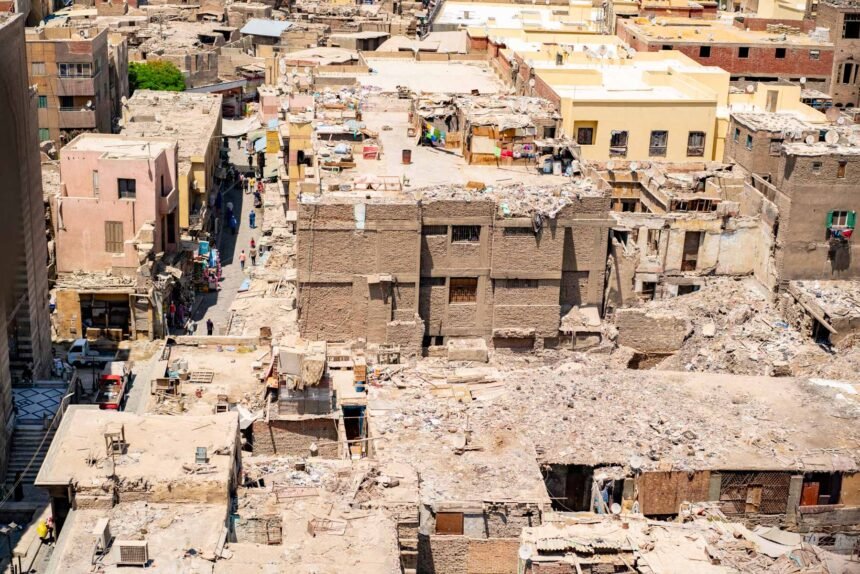
Here’s something no one tells you about Cairo: outside of the famous sites and your hotel, the city looks like it’s falling apart. We spent two days exploring Islamic Cairo, popping into mosques, and were genuinely shocked by the poverty we witnessed. Families eating on the ground, half-dead animals next to restaurants, buildings that looked like they’d been abandoned mid-construction decades ago.
Why the heck isn’t anyone talking about this? Every travel blog I read before our trip made Cairo sound like some exotic, bustling metropolis full of charm. And sure, the Khan el-Khalili market and the mosques ARE beautiful. But the reality beyond those Instagram-worthy locations is heartbreaking, and I think visitors deserve to know that going in.

Getting around Cairo
The one saving grace of Cairo is Uber. It actually works there, unlike in Luxor or Aswan. We used Uber for almost all of our transportation in Cairo and it was a relief to have a set fare, an accountable driver, and a tracked ride. The traffic is absolutely insane — what should be a 20-minute ride can take an hour — but at least you’re not negotiating with an aggressive taxi driver the entire time.
The Cairo Metro also exists and is dirt cheap, but it was packed beyond anything we’d ever experienced and we didn’t feel comfortable using it as tourists with camera gear.
Cairo highlights
The Pyramids of Giza, the Sphinx, the Egyptian Museum (or the new Grand Egyptian Museum if it’s open when you visit), the mosques of Islamic Cairo, and Khan el-Khalili market. These are genuinely world-class sites. The Pyramids alone justify the trip for many travelers, and I won’t pretend otherwise — standing at the base of the Great Pyramid is a top-five life experience.

Luxor: Our Honest Experience
Luxor is where Egypt goes from “challenging” to “almost worth it.” I say that begrudgingly, because we had plenty of bad experiences in Luxor too (the corrupt police officer at the train station, the Careem driver who doubled the fare, guards demanding tips at temples). But the concentration of ancient sites in Luxor is extraordinary, and the city itself is smaller, calmer, and more manageable than Cairo.
What Luxor feels like compared to Cairo
If Cairo is a sledgehammer, Luxor is a persistent tap on the shoulder. The hassle is still there — vendors, touts, people offering unsolicited “help” — but it’s dialed back compared to the intensity of Cairo. The city is smaller, the streets are somewhat quieter, and there’s an actual sense of being near something historically significant rather than being swallowed by urban chaos.
We stayed at the Hilton in Luxor with a view of the Nile, and it was one of the only parts of our entire Egypt trip that felt relaxing. Having a nice hotel to retreat to in Luxor felt more like a base camp for temple excursions, whereas in Cairo the hotel was more of a bunker.

Getting around Luxor
Luxor doesn’t have Uber. It has Careem (owned by Uber) which, based on our one experience, I would describe as “Uber but the driver cancels the app rate and makes up his own price while you’re already in the car.” Book all your transportation through your hotel. I know I keep saying this, but in Luxor it’s even more critical because the alternatives are genuinely terrible.
The sites on the West Bank (Valley of the Kings, Hatshepsut’s Temple, Colossi of Memnon) require a car to reach, and the East Bank sites (Karnak, Luxor Temple) are technically walkable from some hotels but you’ll be hassled the entire way. Just book the driver.
Luxor highlights
Karnak Temple, Valley of the Kings, Luxor Temple, Hatshepsut’s Temple, and the Colossi of Memnon. Luxor is often called the “world’s greatest open-air museum” and that title is well earned. The density of ancient sites within a small area is staggering. You could spend a full week exploring Luxor’s temples and tombs and still not see everything.
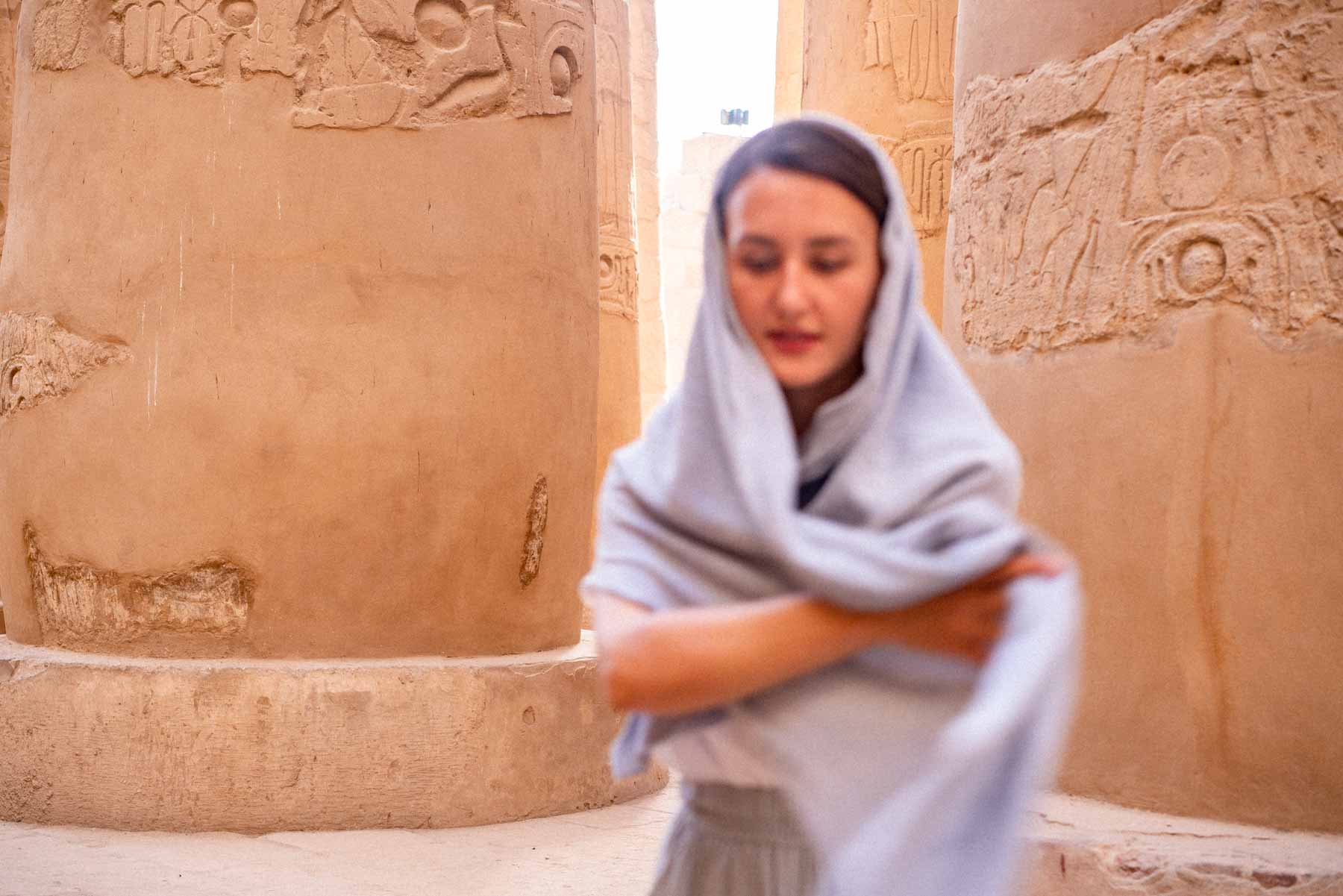
Karnak Temple was the highlight of our entire Egypt trip. More than the Pyramids, more than anything in Cairo. The Great Hypostyle Hall at Karnak — 134 massive columns, each carved with intricate hieroglyphics — is one of the most extraordinary things I’ve ever seen. I got genuine chills standing in that hall, and I say that as someone who was deeply fed up with Egypt by that point in the trip.
The Side-by-Side Comparison
Safety
Neither city is what I’d call “safe” for independent travelers. That said, Luxor felt marginally less intense than Cairo. The smaller size means fewer people, which means less hassle overall. Cairo’s sheer density amplifies every negative aspect — more vendors, more traffic, more chaos, more opportunities for things to go sideways.
Our most frightening experience (the corrupt police officer) happened in Luxor, so I’m not going to pretend Luxor is some haven. But the day-to-day stress level was noticeably lower there.
Sites
Cairo has the Pyramids and the Egyptian Museum. Those two sites alone are world-class. But beyond them, Cairo’s attractions are more about atmosphere (markets, mosques, food) than specific ancient sites.
Luxor has everything else. Karnak Temple, Valley of the Kings, Luxor Temple, Hatshepsut’s Temple, Colossi of Memnon, Medinet Habu, Tombs of the Nobles. If you’re visiting Egypt for the ancient history (and let’s be honest, that’s why most folks are going), Luxor is where the vast majority of it lives.
Accommodation
Both cities have quality hotels. In Cairo, stay near the Pyramids or in Zamalek (the island district), not downtown. In Luxor, stay on the East Bank near the Corniche (the Nile-side promenade). A Nile view in Luxor is worth the splurge — it was the most peaceful part of our entire trip.
Food
Cairo has more dining options because it’s, well, a city of 22 million. Luxor’s restaurant scene is smaller but we had fewer stomach issues there (small sample size, take it for what it’s worth). In both cities, we’d recommend sticking to hotel restaurants and established spots recommended by your guide or hotel concierge. Street food in either city is a gamble your stomach may not win.

Our Verdict
If you’re only going to one city in Egypt, go to Luxor. The temples and tombs are more impressive, the hassle is slightly more manageable, the hotels are lovely, and the overall experience is less overwhelming than Cairo’s sensory assault.
If you have time for both, start in Cairo (get the Pyramids and Egyptian Museum under your belt while you still have patience), then fly to Luxor for the remaining days. The domestic flight is cheap and saves you from taking the train, which was one of our worst experiences — the Luxor train station is where we encountered the corrupt police officer.
Whatever you choose: book a guide, arrange transportation through your hotel, and set realistic expectations. Both cities have incredible things to offer and both cities will test your patience in ways you can’t fully prepare for. Read our full honest Egypt review before planning, and check out what we’d do differently for practical preparation tips.
I hope this helps, Antonina
More Egypt Guides
Frequently Asked Questions
If you can only visit one, we recommend Luxor. The concentration of ancient temples and tombs is extraordinary (Karnak Temple, Valley of the Kings, Luxor Temple), the city is smaller and more manageable than Cairo, and the overall hassle level is slightly lower. Cairo has the Pyramids and Egyptian Museum, which are world-class, but the city itself is overwhelming and more intense for independent travelers.
Neither city is what we would call fully safe for independent travelers. Luxor felt marginally less intense due to its smaller size, but our most frightening experience (a corrupt police officer demanding a bribe with his hand on his gun) actually happened in Luxor. With a reputable guided tour, both cities are manageable. The safety gap between guided and independent travel is more important than which city you choose.
We strongly recommend flying. The domestic flight is affordable and takes about an hour. We took the train from Aswan to Luxor once and it was one of the worst experiences of our trip, culminating in being chased by a corrupt police officer at the Luxor train station. The train is scenic but the stations are chaotic and the journey exposes you to extended hassling without the buffer of a guide.