






When most people think of Mallorca, they picture turquoise coves and poolside cocktails. And fair enough. The beaches here are ridiculous.
But the Serra de Tramuntana mountain range runs the entire northwest coast of the island, and it’s a UNESCO World Heritage landscape that most beach-goers never bother with. Their loss, honestly.
The hiking here ranges from easy village strolls to gnarly peak climbs that will make you question every life choice. We spent weeks exploring these trails and came away with very strong opinions about which ones are worth your time and which ones you can skip. If you’re planning things to do in Mallorca beyond the beach, keep reading.
Here are the hikes we loved most, ranked roughly from “everyone should do this” to “only if you’re slightly unhinged about mountains.”


Barranc de Biniaraix (Our Favorite)
If you only do one hike in Mallorca, make it this one.
You start from the tiny stone village of Biniaraix, which is about five minutes by car from Sóller (or a very pleasant 20-minute walk through orange groves). The village itself is barely more than a cluster of honey-colored stone houses and a church, and it’s worth wandering around for a few minutes before you start walking. There’s a small sign pointing you toward the trailhead. You can’t really miss it.
The trail follows an ancient cobblestone pilgrims’ path that climbs through a gorge alongside a stream, and it feels like stepping back about four centuries. The stonework on this path is incredible. People built this by hand hundreds of years ago and it’s still here, still perfect. The cobblestones are uneven but solid, and the way they’ve been fitted together is genuinely impressive when you stop to look closely.
The full route goes all the way up to the Cúber reservoir, but honestly? Turning back after about 1.5 hours at the top of the gorge is completely satisfying. You get all the drama without committing to a full-day mission. Round trip from Biniaraix, you’re looking at about 3 hours at a comfortable pace with stops for photos and water breaks.
Difficulty-wise, I’d call it moderate. There’s steady elevation gain on cobblestones, so your knees will know about it on the way down. But nothing technical, no scrambling, no moments where you think *why did I do this*. Just gorgeous gorge scenery the entire way up, with the sound of water below you and limestone walls rising on either side.
This is the best hike for people who want incredible scenery without extreme difficulty. If you’re staying in or near Sóller (and you should, check our guide to a day trip to Sóller and Deià), you can be on the trail in minutes.


The GR221 (Dry Stone Route)
Mallorca has its own long-distance trail and it’s spectacular. The GR221, also called the Dry Stone Route, runs through the heart of the Tramuntana from Andratx to Pollença. The full thing takes about 8 days, which is ambitious. But the beauty of it is that you can cherry-pick individual sections and still have a fantastic day.
The section we’d recommend first is Deià to Sóller. It’s roughly 10km, takes about 4 hours, and gives you a perfect mix of coastal views and mountain terrain. You pass through olive groves that are hundreds of years old, along cliff edges where the sea appears suddenly below you, and through some of the prettiest countryside on the island. The difficulty is moderate, nothing terrifying, just a proper day’s walking with a few uphill sections that will get your heart rate up.
The route follows the traditional dry stone paths that crisscross these mountains. The stonework is everywhere, ancient terraces and walls that have been here for centuries. It gives the whole landscape this rich layered quality, like you’re walking through a living museum. The Tramuntana was designated a UNESCO site partly because of these dry stone structures, and once you see them in person you understand why.
If you want to go multi-day, there are refugis (mountain huts) along the route for overnight stays. Book ahead, though. They fill up fast in spring and fall, especially on weekends. And bring your own food because some of them are very basic. A sleeping bag is usually required too, though blankets are sometimes available.


Castell d’Alaró
Here’s the thing about this hike. The castle ruin at the top is cool. The 360-degree views of the entire island are worth every step. But the real reason to do this hike is the lamb.
Let me explain.
From the parking area near the base, it takes about 45 minutes to an hour to reach the castle ruins at the summit. The trail is moderate with some steep sections near the top, nothing too dramatic. You’ll pass through holm oak forest for most of it, which provides welcome shade. At the top you get a ruined Moorish fortress dating back to the 10th century and views that stretch to every corner of Mallorca on a clear day. You can see Palma, the bay, the central plain, and the Tramuntana ridgeline all at once.
But at the base of the final approach, there’s a restaurant called Es Verger. They serve exactly one dish. Slow-roasted lamb shoulder. That’s it. No menu. Just lamb, bread, olives, and wine. About €15. Cash only. And it is one of the best things I have ever eaten. The lamb falls apart, the fat renders down into this impossibly rich sauce, and you’re sitting on a mountain terrace overlooking the valley while sheep wander around the parking area below.
So do the hike for the views. Stay for the lamb. If you’re looking for restaurants in Mallorca that you’ll never forget, Es Verger is it. Just bring cash because they mean it about the card machine. They’ve been doing this for decades and they see no reason to change.

Torrent de Pareis (The Full Gorge)
OK so this one is not for everyone. I need to be upfront about that.
The Torrent de Pareis starts near Escorca (close to the Monasteri de Lluc) and drops down through a 3km limestone canyon that eventually spits you out at Sa Calobra on the coast. It takes 3-4 hours and requires scrambling over boulders the size of cars, finding your way through sections with zero trail markers, and occasionally wondering if you’ve made a terrible mistake. There are points where the canyon narrows so much that you’re squeezing between walls, and other sections where you’re climbing down dry waterfalls using your hands.
This is *only* possible in dry conditions. When it rains, this gorge fills with water and flash floods are a real risk. People have died here. Check conditions before you go and don’t attempt it if there’s been recent rain or rain in the forecast. This is not the kind of trail where you wing it.
But if you have the experience and the conditions are right? It is genuinely one of the most dramatic landscapes in the Mediterranean. The canyon walls tower hundreds of meters above you, the light filters down in strange angles, and the scale of it makes you feel very, very small. When you finally emerge at Sa Calobra and see the turquoise water, the sense of accomplishment is hard to beat.
Important logistics note. You end at Sa Calobra and you can’t easily hike back up the same day. Arrange transport from Sa Calobra, either a bus or a boat back to Port de Sóller. The boat is the better option if the schedule works. Don’t leave this to the last minute or you’ll be stranded at a beach with no way home.

Platja des Coll Baix
This is the hike you do when you want a beach at the end of it. And not just any beach.
From the Ermita de la Victòria trailhead near Alcúdia, it’s about 30-40 minutes of walking to reach Platja des Coll Baix. The trail is rocky and steep in places, with some sections where you’re basically picking your way down a hillside on loose stones. Nothing dangerous, but wear proper shoes, not flip flops. I cannot stress this enough. We saw multiple people attempting this in sandals and every single one of them regretted it.
The payoff is a massive cliff-backed beach that feels completely wild. The cliffs behind the beach are *enormous*, rising straight up like walls, maybe 200 meters high. The water is clear and cold and perfect for snorkeling. Pack lunch and plan to stay a while because you’re not going to want to leave. There are no facilities at the beach, no bars, no umbrellas, nothing. Just you and the cliffs and the sea.
If you want the beach without the hike, you can take a small boat from Alcúdia port. No judgment. But the hike makes the swim at the end feel earned, and there’s something satisfying about that. For more beach options, see our guide to the beaches in Mallorca.


Cap de Formentor Lighthouse Walk
Let me be honest. This isn’t really a hike. But it would be criminal to leave it off a list of outdoor experiences in Mallorca because the scenery is absolutely unreal.
The Formentor peninsula juts out from the northeast corner of the island, and the road from Port de Pollença to the lighthouse at the tip is 20km of cliff-edge driving that will make your palms sweat. The views are constant and absurd. Every bend reveals another impossible coastline. There are moments where the road narrows to barely one lane and you’re looking straight down several hundred meters to the sea.
The must-stop is Mirador Es Colomer, a free viewpoint that sits about 400 meters above the sea. You can see tiny boats below looking like toys. The rock formations jutting out of the water are otherworldly, especially in the late afternoon light. From the lighthouse parking area at the end of the road, there are short walks to various viewpoints along the cliffs. None of them are long but all of them deliver.
One important note. From June through September, private cars are restricted on the Formentor road and you’ll need to take a shuttle bus from Port de Pollença. The shuttle runs frequently but it does add time to the experience. Outside those months, you can drive yourself. Early morning is best for light and for avoiding the tour buses that clog the narrow sections.


Puig de Galatzó
This is the serious one. If you’ve done the other hikes on this list and you’re thinking *I need more*, Puig de Galatzó will sort you out.
Starting from the village of Puigpunyent, the round trip takes 4-5 hours and gains significant elevation on its way to the 1,027-meter summit. This is a proper mountain hike that requires good fitness, sturdy boots, and an early start. The trail is well-marked but relentless. There’s no gentle warm-up section. It just goes up. The final push to the summit involves some light scrambling on rock, nothing exposed or dangerous but you’ll want your hands free.
The reward for all that suffering is standing on top of a peak with the Mediterranean visible on both sides of the island. On a clear day, the views reach all the way to Palma in one direction and the northern coast in the other. You can see the entire Tramuntana ridge laid out below you. It’s the kind of view that makes you forget how much your legs hurt. Almost.
Bring at least 2 liters of water per person. There is no shade on the upper sections and no water sources along the trail. Start before 8am in anything warmer than October weather, or you’ll be climbing in full sun and regretting everything. We made the mistake of starting at 10am in April and it was already getting hot on the exposed sections by noon.

Practical Tips for Hiking in Mallorca
A few things we wish someone had told us before we started hiking here.
Best months are October through May. Summer hiking in Mallorca is brutal. Temperatures hit 35°C+ regularly, there’s almost no shade on exposed ridges, and the heat bouncing off limestone will cook you. Spring and autumn are perfect, with comfortable temperatures and wildflowers everywhere. Winter is mild enough for hiking but some higher trails can be muddy or icy. February and March are our sweet spot, warm enough for comfortable hiking but cool enough that you’re not drowning in sweat.
Water is the biggest thing to get right. Bring at least 1.5 liters per person for moderate hikes, and more like 2-3 liters for the longer ones. There are basically no water sources on the trails. The Tramuntana is drier than it looks. We carried a 2L bottle each and a Sawyer filter just in case, though we never needed the filter.
Sunscreen even on cloudy days. The UV at elevation hits differently, and I learned this the hard way on our second day with a sunburn that lasted the rest of the trip. The Tramuntana is shadier than the rest of the island thanks to tree cover, but the exposed ridgeline sections will fry you faster than you expect.
Footwear matters more than you think. The rocky terrain is unforgiving on ankles. Proper hiking boots with ankle support are worth it for everything except the Formentor viewpoints. Trail runners are fine for the easier walks but not for Torrent de Pareis or Puig de Galatzó. If you’re only bringing one pair, bring boots.
Download offline maps before you go. Cell service is patchy in the mountains and some trails have minimal signage. We used AllTrails and Wikiloc and both worked well offline. Having a GPS track on your phone is especially important for the Torrent de Pareis where there are no trail markers.
Parking at most trailheads is free but spaces are limited, especially on weekends. Arrive before 9am for popular trails like Biniaraix and Torrent de Pareis. If you’re staying in Sóller or Pollença, check our guide to where to stay in Mallorca for the most convenient hiking bases.
Mountain weather can change quickly in the Tramuntana. We had a day that started sunny and turned to thick cloud within an hour. Bring a light layer even if the forecast looks perfect. A packable rain jacket weighs nothing and will save you if the weather turns.
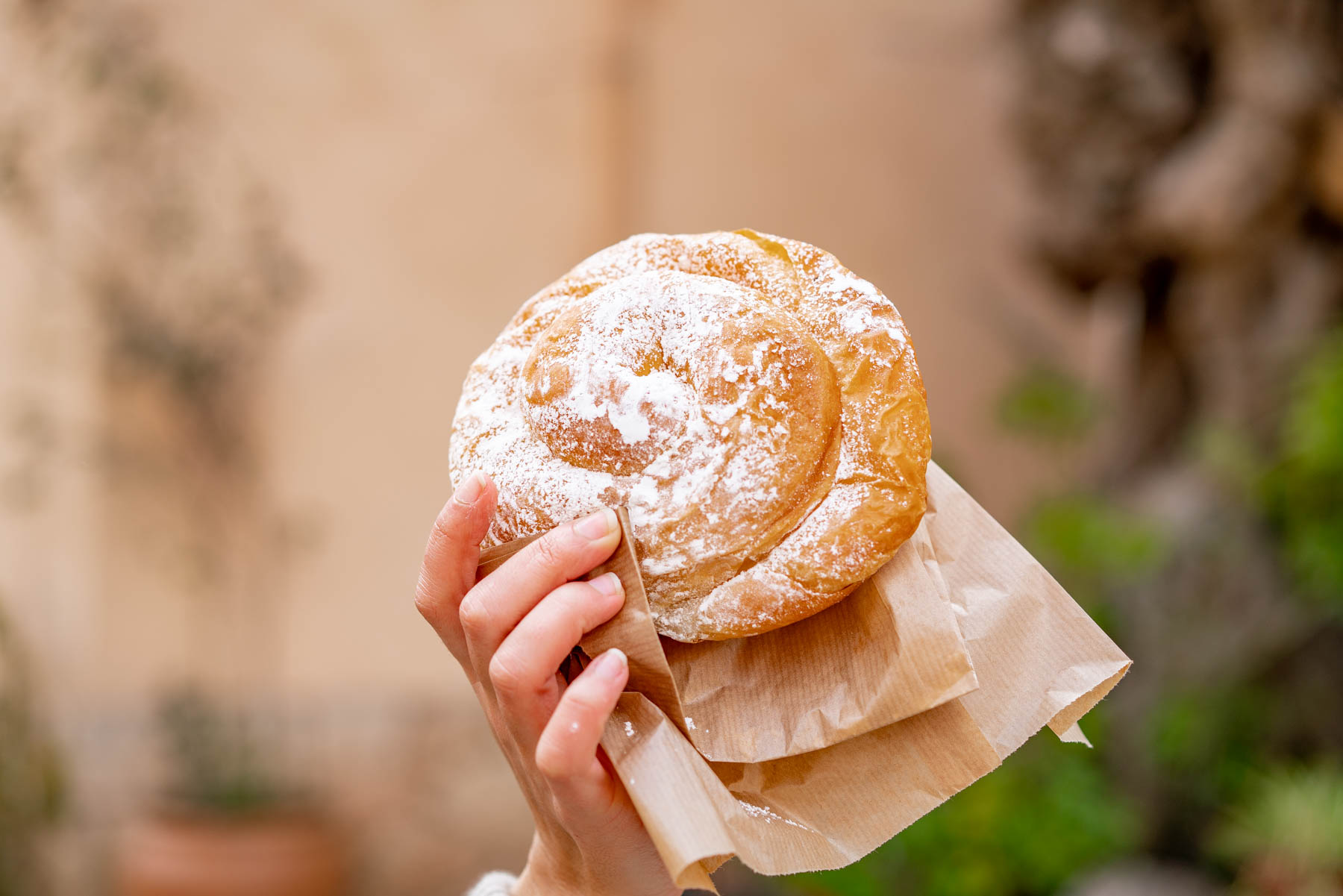
If you’re planning a longer trip, our one week in Mallorca itinerary covers how to mix hiking days with beach days and town exploration. Because as much as I love a good trail, I also love sitting in a plaza eating ensaimadas. Balance is important.