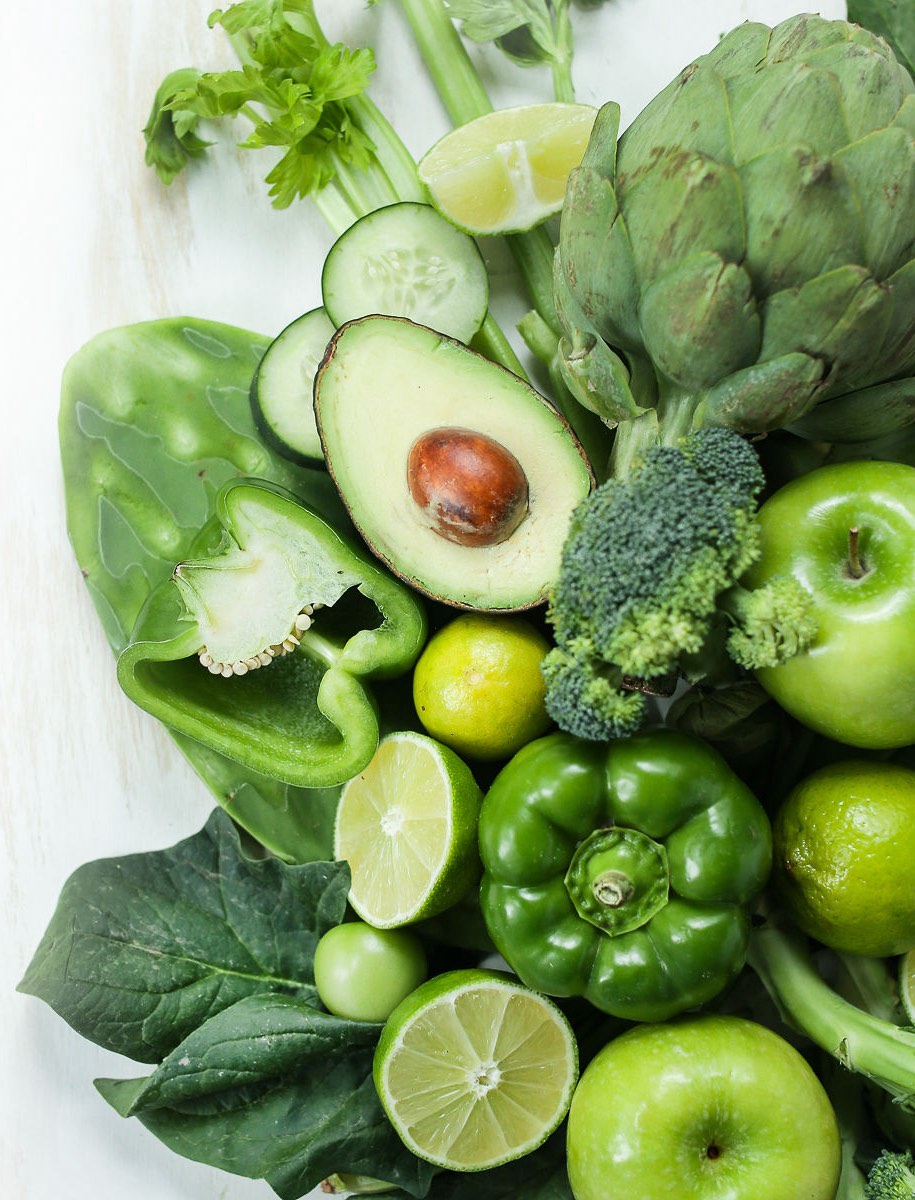





People often ask me if I buy everything organic, and I’ll be the first to admit that I don’t. While I strive to eat mostly organic and use organic ingredients when developing recipes, it’s not always practical. And when it comes to fruits and vegetables, buying organic isn’t always necessary.
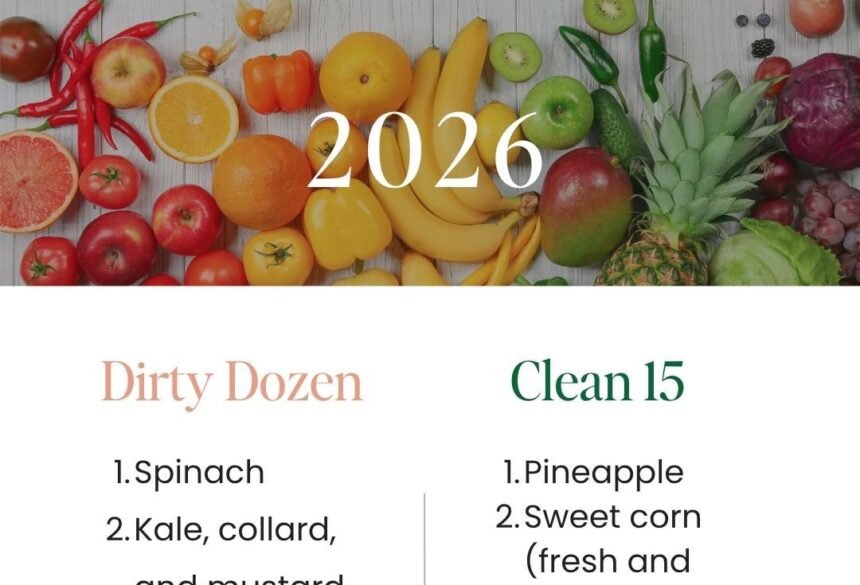
When shopping at the grocery store, I rely on the Dirty Dozen and Clean 15 lists to help me decide which produce to buy organic and where I can save money buying conventional.
Dirty Dozen: These fruits and veggies are most likely to contain pesticide residues. If you want to reduce your exposure, buy organic versions of these whenever possible.
Clean 15: These have the least pesticide residues. You can feel confident buying conventional versions of these.
The lists are updated every year by the Environmental Working Group (EWG), a non-profit organization dedicated to protecting human health and the environment. They analyze the latest U.S. Department of Agriculture testing data to rank produce by pesticide contamination. The 2026 report was released in March 2026.
New for 2026: For the first time, the EWG is highlighting PFAS, the “forever chemicals,” in pesticides used on produce. The most frequently detected pesticide across all fruits and vegetables this year was fludioxonil, a PFAS fungicide. This is worth paying attention to because PFAS chemicals don’t break down in the environment or in your body.
By following these lists, you can make smarter choices about when to invest in organic produce. It’s all about balancing your budget, supporting small farms, and making health-conscious decisions.
A note on small farms: Many small farms use organic practices but haven’t gone through the expensive certification process. If you’re shopping at a farmer’s market, don’t hesitate to ask farmers about their growing practices. I’ll often buy produce from small farms, even if it’s on the Dirty Dozen, if they follow organic methods but aren’t certified yet.
Save the image above to your phone for easy reference while you’re shopping.
Here are the most up-to-date Dirty Dozen and Clean 15 lists:
The Dirty Dozen (2026)
Buy these organic whenever possible:
- Spinach
- Kale, collard, and mustard greens
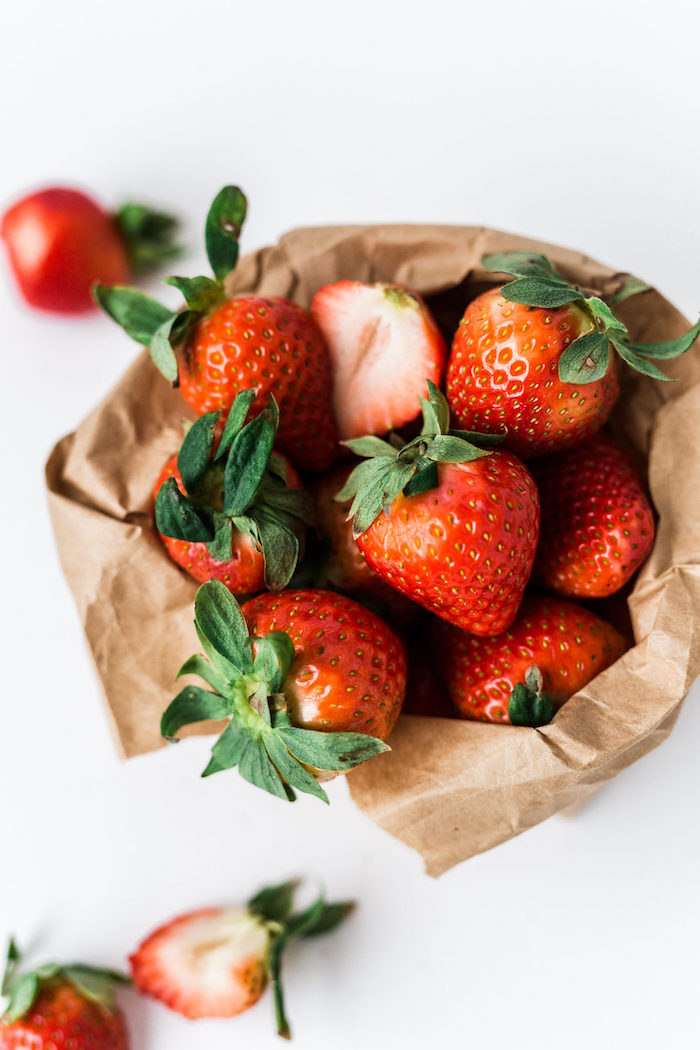
- Strawberries
- Grapes
- Nectarines
- Peaches
- Cherries
- Apples
- Blackberries
- Pears
- Potatoes
- Blueberries
Also noted for high toxicity: Bell and hot peppers, and green beans.
Key findings: 96% of Dirty Dozen samples tested positive for pesticide residues, with some samples showing up to 23 different pesticides. 75% of all non-organic produce samples contained pesticide residues.
The Clean 15 (2026)
These are safe to buy conventional (not organic):
- Pineapple
- Sweet corn (fresh and frozen)
- Avocados
- Papaya
- Onions
- Sweet peas (frozen)
- Asparagus
- Cabbage
- Cauliflower
- Watermelon
- Mangoes
- Bananas
- Carrots
- Mushrooms
- Kiwi
Key findings: Nearly 60% of Clean 15 samples had no detectable pesticide residues. Only 16% had residues of two or more pesticides. Avocados and sweet corn were the cleanest, with less than 2% of samples showing any detectable pesticides.
And yes, avocados are still near the top of the Clean 15!
What Changed in 2026
The biggest change this year is the PFAS finding. EWG’s analysis found that PFAS-based pesticides, specifically fludioxonil, were the most commonly detected pesticide across all produce tested. PFAS chemicals are called “forever chemicals” because they don’t break down naturally, and they can accumulate in your body over time. Buying organic is one way to reduce your exposure.
The Dirty Dozen order also shifted slightly from 2025. Spinach and kale moved above strawberries this year, and the overall rankings now factor in toxicity levels along with residue counts, giving a more complete picture of risk.
Full Produce Ranking (Dirtiest to Cleanest)
For those who want the complete picture, here’s the full ranked list of 47 fruits and vegetables from dirtiest (#1) to cleanest (#47):
- Spinach
- Kale, collard, and mustard greens
- Strawberries
- Grapes
- Nectarines
- Peaches
- Cherries
- Apples
- Blackberries
- Pears
- Potatoes
- Blueberries
- Bell and hot peppers
- Green beans
- Tangerines
- Cucumbers
- Celery
- Lettuce
- Winter squash
- Plums
- Tomatoes
- Cherry tomatoes
- Tomatillos
- Summer squash
- Raspberries
- Oranges
- Grapefruit
- Eggplant
- Snap peas
- Sweet potatoes
- Cantaloupe
- Broccoli
- Kiwi
- Mushrooms
- Carrots
- Mangoes
- Bananas
- Cauliflower
- Watermelon
- Cabbage
- Asparagus
- Sweet peas (frozen)
- Onions
- Papaya
- Avocados
- Sweet corn (fresh and frozen)
- Pineapple (cleanest)
For me, the closer the produce is to the Clean 15, the more comfortable I feel buying conventional. I also look at the price. If the organic version doesn’t cost a lot more, I’ll go organic anyway. Bananas are a good example. They didn’t make the Clean 15, but they’re close (#37). Organic bananas are usually about twenty cents more per pound at my grocery store, so I still buy organic. But mangoes and watermelons can get expensive, and they’re close enough to the Clean 15 that I feel good about the conventional ones.
How to Use These Lists
Keep these lists saved on your phone (I save the images above to my favorites folder on my iPhone for easy access at the store). Here’s my general approach:
- For Dirty Dozen items: Buy organic whenever your budget allows. If organic isn’t available or is way more expensive, buy conventional and wash thoroughly. Fresh produce, even conventional, is always better than no produce.
- For Clean 15 items: Buy conventional and save your money for the items that matter more.
- For everything in between: Use your judgment based on price and availability. The full ranked list above can help you decide.
- A note on washing: Washing produce doesn’t necessarily remove all pesticides since some grow into the entire plant, but it can reduce your exposure. Always wash everything thoroughly, even organic produce.
- Frozen is a great option too: Frozen organic fruits and vegetables tend to be more affordable and keep for months. I almost always have frozen organic blueberries from Costco in my freezer for smoothies and other recipes.
Always do the best you can when it comes to the quality of your food. Fresh produce is always better than no produce.