





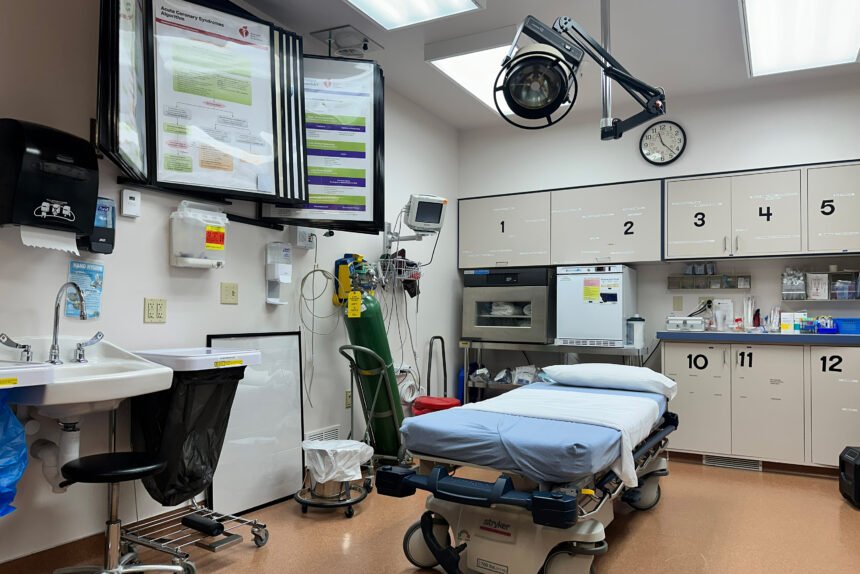
BIG SANDY, Mont. — The emergency department at Big Sandy Medical Center is one room with a single curtain between two beds.
It’s one of the many parts of the 25-bed rural hospital that need updating, former CEO Ron Wiens said.
He said the hospital, an essential service in its namesake town of nearly 800 residents in the state’s sprawling north-central high plains, needs at least $1 million for deferred maintenance, including a failing HVAC system. But the facility has struggled to make payroll each month and can’t afford to make all the fixes, Wiens said.
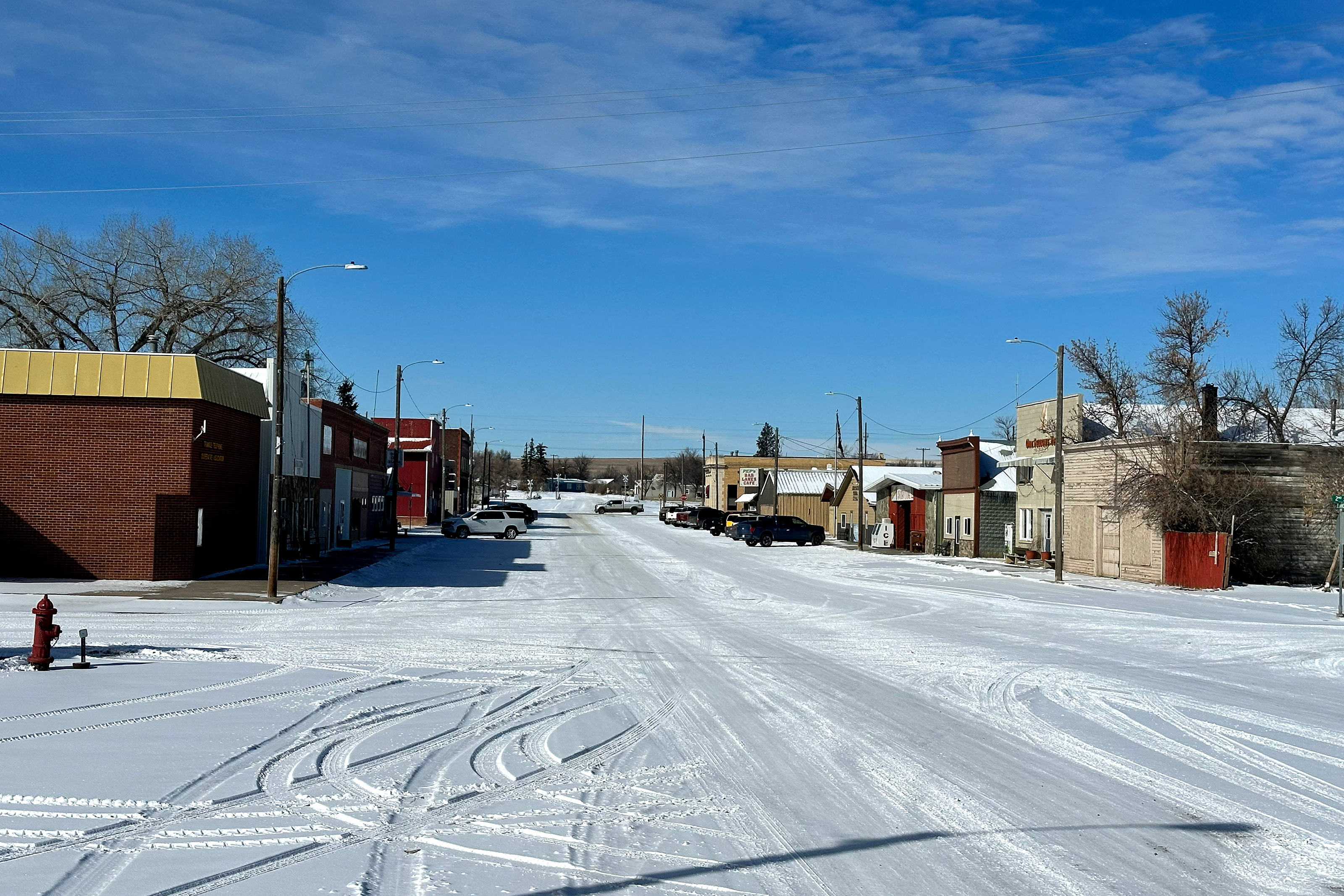
Built by farmers and ranchers in 1965, Big Sandy Medical Center began with nine beds. Today, a similar community effort — donations and grants to plug financial holes each year — keeps it afloat.
Wiens, who recently left his position at the hospital, said he wishes Big Sandy could get funding from Montana’s share of the $50 billion federal Rural Health Transformation Program to renovate the hospital and direct payments to help secure its future. The state received more than $233 million in its first-year award.
But the hospital may not get the kind of help he sought.
That’s because the five-year program focuses on new, creative ways to improve access to rural health care, not on directly funding services and renovations. And Montana is one of at least 10 states whose leaders say projects launched under the federal program could lead rural hospitals to cut services so they can continue to afford to offer emergency and other essential care.
Congressional Republicans created the fund as a last-minute sweetener to their One Big Beautiful Bill Act, signed into law last summer. The funding was intended to offset disproportionate fallout anticipated in rural communities from the law, which is expected to slash Medicaid spending by nearly $1 trillion over 10 years.
Montana’s application includes programs to make it easier for rural residents to get medical care and live a healthy lifestyle. For example, it says funding can be used to start community gardens, train paramedics to make home visits, open school-based clinics, or bring mobile clinics to rural areas.
The application also says rural Montana hospitals can receive payments for implementing recommendations, “including right-sizing select inpatient services” to match demand. In some cases, it says, right-sizing might mean “downsizing.” The state says hospitals will have input and recommendations will be specific to each facility.
“That’s what has all the hospitals on pins and needles, words like restructuring, reducing inpatient beds. Everybody is going, ‘What is this going to look like?’” Wiens said.
The Montana Department of Public Health and Human Services declined to answer questions about how it will carry out its right-sizing efforts.
A Lifeline of Care
Big Sandy cattle rancher Shane Chauvet doesn’t want any services cut.
He credits Big Sandy Medical Center with saving his life after a flying piece of metal nearly cut off his arm during a windstorm a few years back.
“I looked over, saw it coming, and whack!” Chauvet recalled.
His wife drove him to the hospital, where they frantically pounded on the ER door while Chauvet’s blood pooled on the ground.
Because of the storm, staffers worked on Chauvet with no power and no ability to summon a helicopter. He was then taken by ambulance 80 miles through intense rain and hail to a larger hospital.
Chauvet understands the state’s plan doesn’t call for eliminating emergency care, but he worries that reducing other services would set off a downward spiral for the hospital and his town.

In Oklahoma, realigning clinical services could mean “shutting down service lines,” according to its application to the federal program. And in Wyoming, any facility that receives funding must agree to “reduce unprofitable, duplicative or nonessential service lines,” according to its rural health law.
Monique McBride, business operations administrator at the Wyoming Department of Health, said the department interprets right-sizing as helping rural hospitals provide essential services — such as emergency departments, ambulance services, and labor and delivery units — while maintaining long-term, financial stability.
“This might involve limiting some elective procedures that could be done at lower cost in higher-volume facilities. The main distinction here is time-sensitive emergencies vs. ‘shoppable’ services,” she said.
A New Lease on Life?
Seven of the 10 states — Nebraska, North Dakota, Tennessee, Kansas, Nevada, South Carolina, and Washington — where rural hospital service cuts are on the table say they’ll help pay for hospitals to convert to Rural Emergency Hospitals. The recently created federal designation requires hospitals to halt inpatient services and offers enhanced payments to help them maintain emergency and outpatient care.
At least 15 additional states wrote that they’ll use the federal funding to right-size, evaluate, or adjust services — which could mean adding or taking away services, or transitioning them to a telehealth or outpatient setting.
Brock Slabach, chief operations officer of the National Rural Health Association, said, “There’s a proper concern from rural hospital administrators that this funding is not going to where it was intended.”
He said cutting services that lose money could backfire in the long run. For example, he said, halting labor and delivery care might drive more people out of small towns, further reducing hospitals’ patient numbers and revenue.
The type of hospital services that states will assess matters, said Tony Shih, a senior adviser at the Commonwealth Fund, a nonprofit focused on making health care more equitable.
“If the end result is that high-margin services are taken away from local hospitals with nothing given back in return, it can be financially harmful,” he said.
Shih noted that states’ plans to add more outpatient care could prove beneficial for patients. It’ll take time to know which states help stabilize rural hospitals, he said.
Rural hospital leaders say they know which changes would keep their facilities open and that states shouldn’t suggest or mandate service cuts and other changes on their behalf.
Josh Hannes, who oversees rural health policy at the Colorado Hospital Association, said “top-down” directives won’t work.
He said the association’s members believe they can find efficiencies and are eager to collaborate. But “a state agency shouldn’t be making those determinations,” he said.
Hannes said members are worried Colorado’s plan to classify rural health facilities as a “hub, spoke, or telehealth node” will compel service reductions. The classification will help determine “which services are sustainable locally and which are best provided regionally or through telehealth,” according to its program application.
Spokespeople for the Colorado and Oklahoma health departments said no facility will be forced to end services. But Oklahoma spokesperson Rachel Klein said some facilities might choose to do so as part of a broader effort to make sure they’re meeting community needs while remaining financially stable.
“A hospital might shift certain services to a nearby regional provider with higher patient volume and specialized staff while expanding other local services,” such as primary, outpatient, or community-based care, she said.
Wiens and Darrell Messersmith, CEO of Dahl Memorial Hospital in the southeastern Montana town of Ekalaka, said they worry the only way hospitals will get their share of funding is to cut services or become Rural Emergency Hospitals that don’t offer inpatient services.
“I would hate to see things shift toward a pack-and-ship facility,” Messersmith said. “Right now, we function quite well as an inpatient facility.”
Not all Montana health leaders are worried.
Ed Buttrey, president and CEO of the Montana Hospital Association, said he thinks his state’s plan could help rural hospitals become financially sustainable and survive Medicaid cuts. Buttrey is also a Republican state lawmaker.
Chauvet, the Big Sandy rancher, said his perspective on whether remote towns like his should have a hospital is forever changed because of his accident.
“I always would say, ‘Oh, they’re nice to have,’ but now I look at the hospital and say, ‘That’s essential to our community,’” he said.
KFF Health News is a national newsroom that produces in-depth journalism about health issues and is one of the core operating programs at KFF—an independent source of health policy research, polling, and journalism. Learn more about KFF.
USE OUR CONTENT
This story can be republished for free (details).