





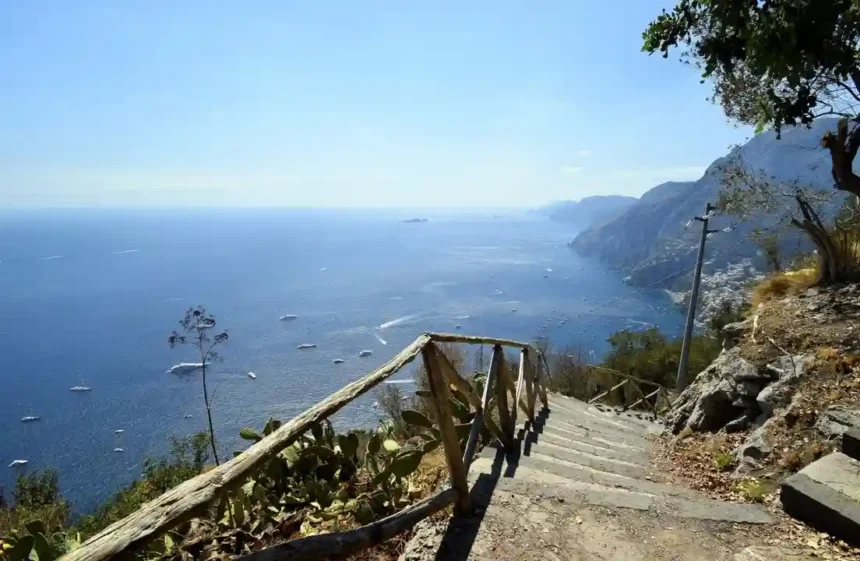
The Path of the Gods (Sentiero degli Dei) is one of those hikes that lives up to its name: dramatic cliffs, endless sea views, lemon-scented terraces and the kind of vistas you’ll remember long after you leave. Most people walk the classic one-way route between Bomerano (Agerola) and Nocelle (above Positano), which is accessible for fairly fit walkers and can be slotted into a half- or full-day plan depending on how slowly you want to enjoy it. This guide is built to help you hike it confidently. Where to start and finish, realistic timing, transport and logistics, safety and weather considerations, packing details, GPS tips and how to book accommodation, transfers or guided tours.
Quick facts
- Classic distance: ~6.5 km (4 miles) one-way from Bomerano → Nocelle
- Elevation change: approx 200–250 m (varies by exact start/finish)
- Time: 2–4 hours walking (allow more for photos, rests and transport)
- Stairs to Positano: ~1,500–1,700 steep steps if you descend from Nocelle into Positano
Why this hike works
The Sentiero degli Dei isn’t an alpine scramble, it’s a coastal ridge walk with dramatic exposure but relatively straightforward footfall for the most part. The trail sits on limestone ridges that frame the Tyrrhenian Sea and give sweeping views of Capri, Positano and the patchwork terraces below. It’s great for photographers, lovers of coastal scenery and people who prefer a memorable outdoor experience without technical climbing. Because the trail is linear, most hikers combine it with local buses, taxis or pre-booked transfers to make a round-trip day practical.
Where to stay (best bases for hiking the Sentiero degli Dei)
Pick a base that minimises travel to the trailhead so you spend more time hiking and less time commuting. Below are the three towns I recommend, each is practical for completing the classic route and have their own benefits to suit your needs. We would recommend booking in advance particularly during peak season to avoid disappointment. Options can be limited and you’ll want to secure accommodation which allows easy access to the hiking trail.
Bomerano / Agerola — shortest transfer, easiest start
Best if you want the earliest, calmest start. Bomerano and nearby Agerola put you literally at or very close to the trailhead, so you can wake up, walk on and avoid buses in high season. Accommodations here tend to be quieter and more affordable than Positano; ideal for photographers or anyone who wants sunrise on the ridge.



Nocelle / Positano — finish with views and nightlife
Stay in Nocelle for a peaceful finish or Positano if you want dinner, shops and beachfront life after the hike. Nocelle is small and convenient; Positano offers more amenities but higher prices and crowds. Either base makes it easy to reverse the route (Nocelle → Bomerano) or finish in town and enjoy an evening by the sea.
Amalfi — best balance of services and transport
Amalfi is the practical middle ground. You’ll take a short SITA bus to Bomerano in the morning, which is straightforward and gives you more hotel options and dining choices for before/after the hike. It’s a good pick for families or anyone combining the hike with ferry trips.
Quick checklist to choose
Want best services and flexible connections: Amalfi
Minimal transit / earliest start: Bomerano/Agerola
Prefer to finish in a seaside town with dinner options: Nocelle/Positano
How long does it actually take?
The walking time for the full classic route is commonly reported as 2–4 hours. Fast hikers can do it in around two hours; most people – especially those stopping for photos and short rests take 3 to 3.5 hours. Budget extra time if you’re catching a bus with limited frequency, or if you plan to eat in Positano or linger at viewpoints. If you plan to descend into Positano via the steps, add 30–60 minutes for the stair descent depending on fitness.
Getting there and transport logistics
Most walkers begin in Bomerano. SITA Sud buses (the local bus service) regularly link Amalfi and Agerola/Bomerano. Tickets are cheap and can be bought at local kiosks, tobacconists or sometimes on board, but buses get crowded in high season, and check for schedule changes in shoulder seasons. Allow extra time to find bus stops and to wait for the next vehicle, especially on weekends or public holidays.
Typical plan:
- Take the SITA bus from Amalfi to Agerola (Bomerano) – check SITA Sud schedules for the current season.
- Hike Bomerano → Nocelle (or reverse).
- From Nocelle either descend the steps into Positano or catch the local bus/taxi back to Amalfi or your base.
If you want convenience, book a private transfer for either the arrival to Bomerano or a post-hike pickup in Positano/Amalfi. Transfers cost more than the bus but remove the uncertainty of schedules and crowding which is a useful trade-off if you’re on a tight itinerary or traveling with family or luggage.
Find Amalfi Coast hotels on Booking.com
Trail conditions & wayfinding
The Sentiero degli Dei is marked in places, but signs can vary and local detours happen after storms. Most of the route is a single clear trodden path, but you’ll encounter rocky ground, loose gravel and steps carved into the hillside. Bring a GPX file or offline map if you prefer certainty. Several hiking apps host reliable routes for the Sentiero degli Dei. If you’re not confident with navigation, choose a guided walk where the guide handles route-finding.
Key waypoints (useful if you’re loading a GPX): Bomerano (Agerola) — Colle Serra — La Tagliata viewpoint — Nocelle (Positano overlook). Exact GPS coordinates vary by guide, but most public GPX files match these checkpoints.
Safety, weather and seasonal notes
Spring and autumn offer the best combination of pleasant temperatures and thinner crowds. Summer is hot; start at sunrise if hiking then. Winter can be quiet but foggy and wet so check local forecasts. Heavy rain makes limestone very slippery; postpone your hike if the trail is soaked. The trail is exposed in places without railings; if you suffer from vertigo, pick a shorter, less exposed section.
Practical safety tips:
- Tell someone your plan and expected finish time if hiking solo.
- Carry enough water – 1–2 litres depending on temperature and personal needs.
- Wear sturdy footwear (trail shoes or light hiking boots) sandals are not recommended for the whole route.
- Bring a small first-aid kit and blister plasters.
- Phone coverage is generally good at viewpoints but can drop in gulleys; offline maps are helpful.
Packing & footwear — the practical details
Good shoes make the hike far more enjoyable. A pair of supportive trail shoes with grippy soles is ideal; light hiking boots are fine too. Avoid open sandals for the full route because of loose stones and dusty steps. Bring a wide-brim hat and sunscreen; the ridge is exposed and the Mediterranean sun is strong. A light wind- or rain-jacket folds small and is useful for coastal breezes. For water, a hydration bladder is handy for easy sipping; two 500ml bottles are a safe minimum in mild weather, more in summer.
Optional but useful gear: trekking poles if you have bad knees (they help on descents and stair sections), a compact camera or phone with extra battery, and a small snack (nuts, dried fruit) for sustained energy.
Food & a local stop
There are very limited services directly on the ridge. Plan to carry water and a snack for the walk itself. Near Nocelle there’s an excellent place to stop off for refreshments – Il Chiosco del Sentiero degli Dei – it’s a small, welcoming stop with a great sitting area where you can relax out of the sun looking over the Tyrrhenian Sea and the terraces below. They serve cold drinks, granitas and light plates focused on local produce, especially cured meats, cheeses and bread — exactly the kind of salty, refreshing snack that hits the spot after a ridge walk.
Why consider a guided tour (the real benefits)
A guided tour is more than just convenience. For many visitors, a guide transforms the hike into a richer experience: they point out local history, botanical and geological features you’d otherwise miss, share photography tips, and lead you to lesser-known viewpoints. Guides also manage timing against local transport and can advise on weather-related decisions. From a safety perspective, a guide knows which sections to skirt during poor conditions, carries extra first-aid supplies, and can coordinate assistance if someone in the group needs help.
Who benefits most from a guided tour? First-timers to the Sentiero degli Dei, families with younger children who want a relaxed pace, anyone short on time who wants logistic chores handled, and people who prefer a social, educational hike. Tours range from small-group hikes to private guided walks that include transfers and sometimes a stop in Positano or Capri. If you’re curious about guided options, it’s helpful to let readers compare tour styles and reviews before they commit.
Compare Path of the Gods tours on GetYourGuide — great for browsing small-group and private-guided options, reading reviews, and seeing what’s included (transport, snacks, skip-the-line perks).
Timing your day — sample plans
Fast morning (for early risers): Take a dawn SITA bus to Bomerano, hike quickly in 2–2.5 hours enjoying sunrise light, and be back in Positano by late morning for a leisurely lunch. This is ideal in high summer to avoid heat.
Relaxed day (for photographers and leisure walkers): Start mid-morning, take generous breaks at viewpoints, stop for a snack in Nocelle, and arrive in Positano by afternoon. This allows time for photos and a relaxed descent with minimal rushing.
Family-friendly half-day: Choose a shorter segment such as Bomerano → Colle Serra or Nocelle → Colle Serra and return. Keep the walk under 90 minutes and finish with gelato or a seaside meal in Positano or Amalfi.
Practical tips that make the day smoother
Buy SITA tickets in advance at a local tabacchi (tobacco shop) if possible as queues form in summer. Wear layers so you can adjust to early-morning chill and later warmth. Carry small change for buses and kiosks. If you plan to descend to Positano via the steps, be aware the stair route is steep and can be crowded; allow time and wear shoes with good grip. Consider a backup plan: if the kiosk is closed or buses are full, you may want a pre-booked taxi or transfer number saved in your phone.
Noise, crowds and photography
Peak months (July–August) bring the most foot traffic. Sunrise is quiet and magical, while midday and late afternoon are busier. If you want photos without strangers in the frame, aim for sunrise or early evening in shoulder season (April–June, September–October). The classic “money shot” is the ridge with Positano below; try to find a slightly less obvious viewpoint left or right of the crowd to get a cleaner composition.
Common questions, briefly answered
Can children or older hikers do it? Yes, with caveats. Shorter sections are very manageable; the full route requires a moderate fitness level. Is the trail open year-round? Generally yes, but winter weather and mud can make parts less pleasant. What about dogs? Leashed dogs are usually permitted but bring water for them. Rain advice: wet limestone is slippery so postpone if heavy rain is forecast.
Ready to plan your hike? You can compare and book Amalfi Coast hotels on Booking.com.
Final takeaway
The Sentiero degli Dei is a must-do for visitors who value coastal panoramas and an active day outdoors without technical climbing. Plan timing carefully, bring proper footwear and water, and consider a guided tour if you want local insight, easier logistics, or extra safety.