





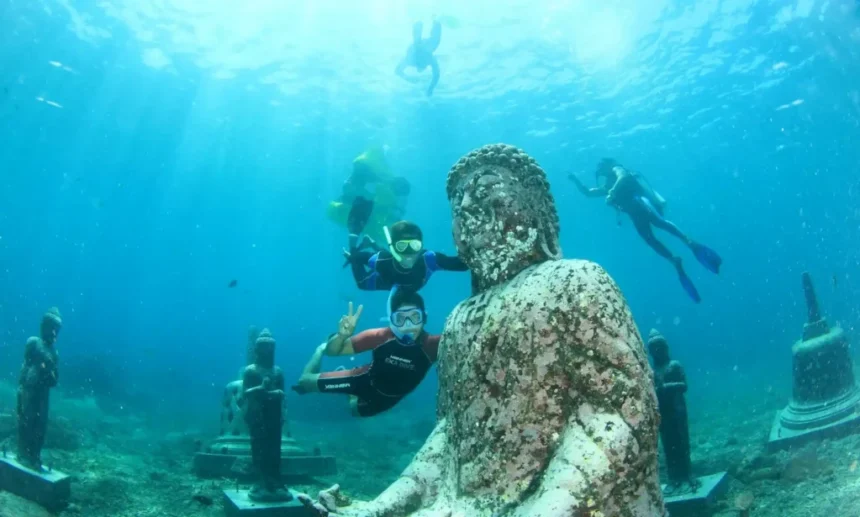
If you’ve already fallen in love with diving, there comes a point where the standard reefs and easy conditions stop being enough. You start wondering what’s deeper, what’s more challenging, and what’s next.
For me, that step happened in Nusa Lembongan.
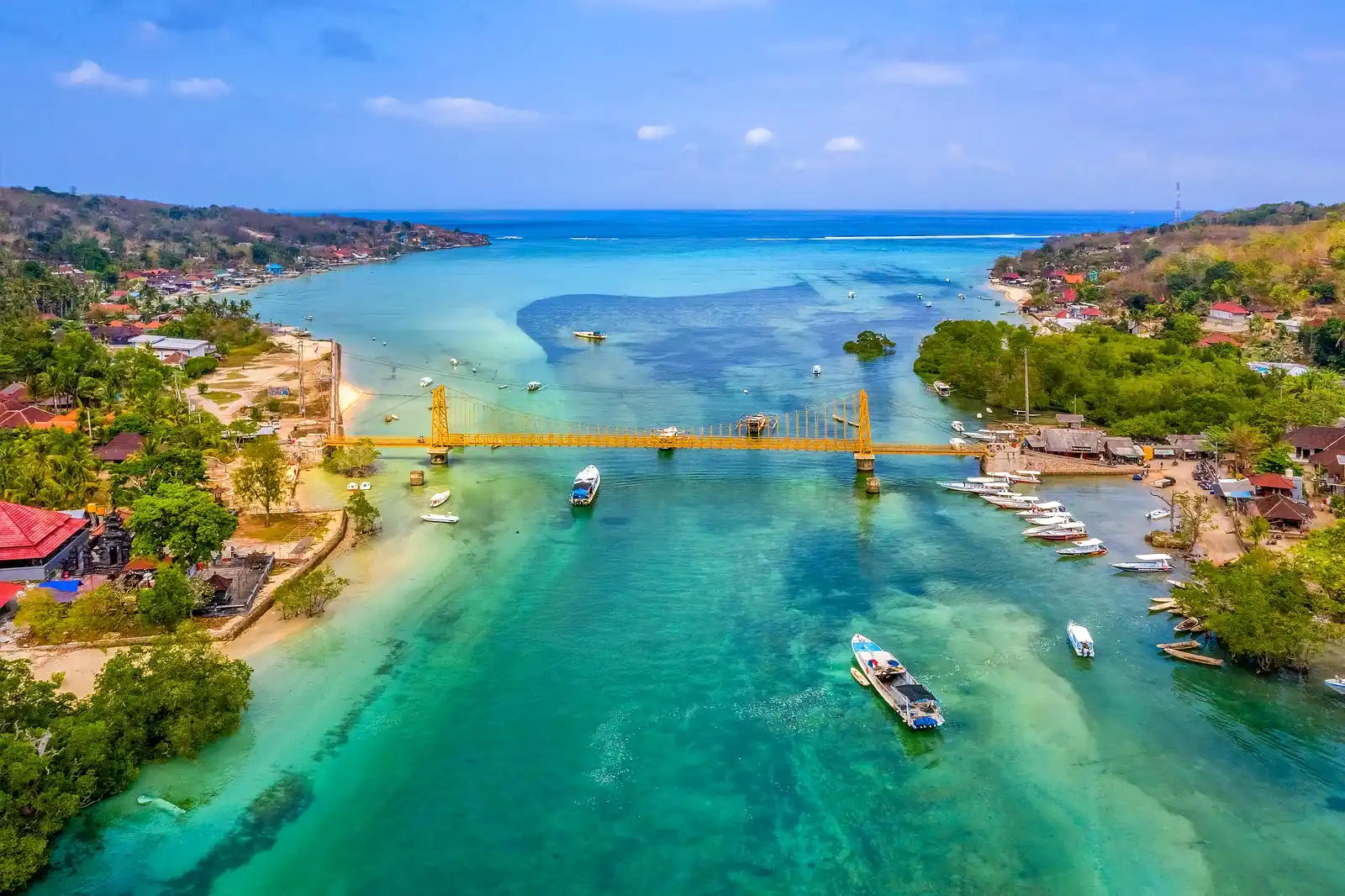
Just a short boat ride from Bali, this small island feels like a different world entirely. It’s quieter, less developed, and surrounded by deeper water and stronger currents — the kind of environment that naturally pushes you beyond recreational diving.
If you’re still planning your trip, read our guide on where to stay in Bali and how to structure your trip.


This isn’t the place to stay comfortable. It’s the place to level up.
⸻
Why Nusa Lembongan?
Nusa Lembongan sits just southeast of Bali and is part of the Nusa Penida region. It’s known for its clear water, strong currents, and access to deeper dive sites, which makes it ideal for more advanced training.
But what really stands out is the balance it offers. You’re not learning in a controlled, artificial environment — you’re learning in real ocean conditions. That’s what makes the experience feel so different, and so much more rewarding.
It’s also easy to reach, with regular boats from Sanur taking around 30 minutes. Once you arrive, everything slows down. Fewer crowds, better water visibility, and a stronger connection to the ocean.
As the island is relatively small, most people stay close to the main beach areas or near their dive centre to keep things simple. If you’re planning your stay, it’s worth comparing accommodation options in advance as availability can be limited during peak periods.
⸻
What Tech Diving Actually Involves
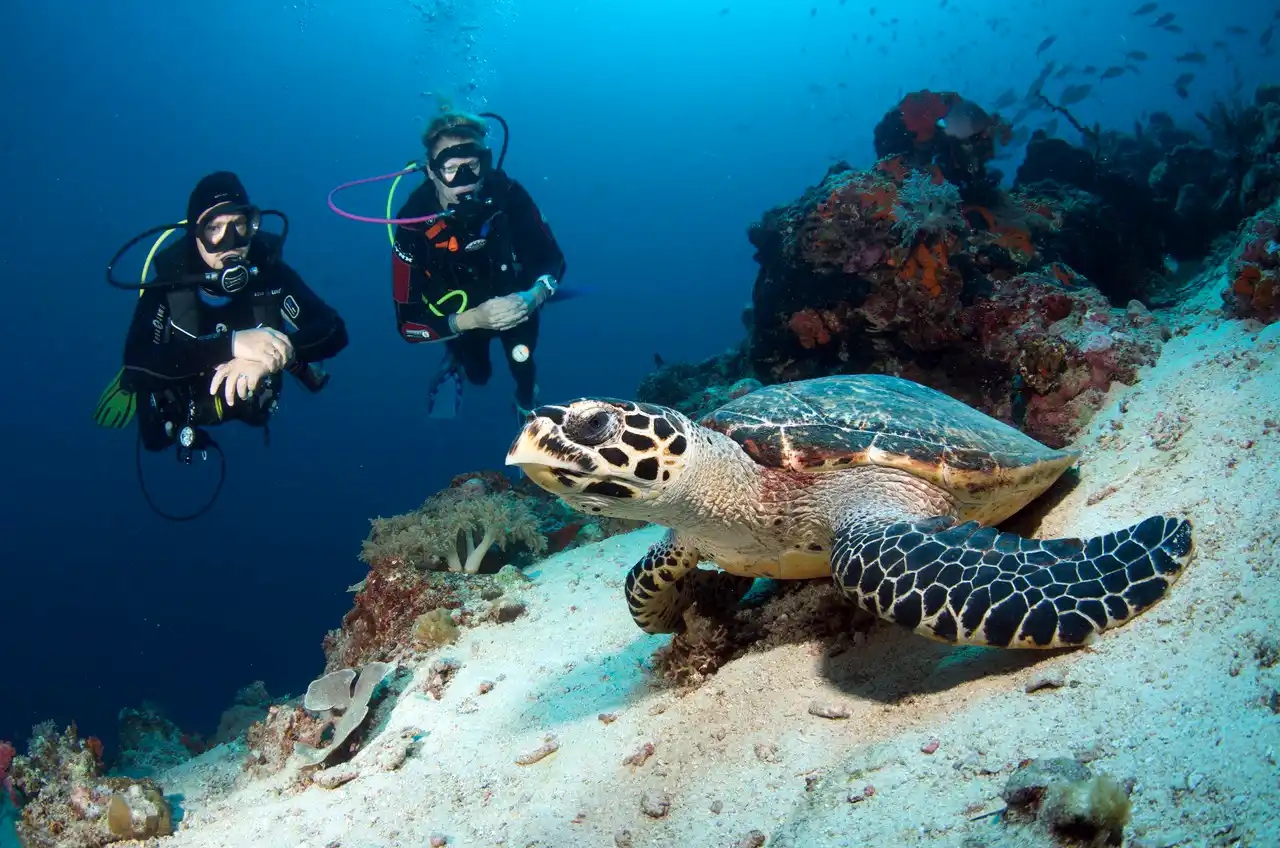
Before getting into the experience itself, it’s worth understanding what technical diving really means.
It’s not just “deeper scuba diving.” It’s a completely different approach.
You’re dealing with longer dive times, more complex planning, and a much stronger focus on precision. There’s more responsibility on you as a diver — from managing your gas to understanding decompression and handling problems underwater.
It’s not something you drift into casually. But if you’re ready for it, it opens up a completely different side of diving.
⸻
What a Week of Training Looks Like

The week starts slowly, but deliberately.
The first couple of days are focused on theory and controlled practice. You spend time understanding dive planning, gas management, and the principles behind what you’re about to do. It’s not the most exciting part on the surface, but it’s what everything else is built on.
From there, things start to shift.
You move into the water, first in calm conditions, focusing on control. Buoyancy becomes more precise, movements more deliberate, and every action more intentional. There’s a noticeable difference compared to recreational diving — nothing is rushed.
By the middle of the week, you’re out in open water. This is where it starts to feel real.
The dives get deeper, the conditions less predictable, and you begin applying everything you’ve learned under pressure. Each dive builds on the last, gradually pushing you further while still staying within a controlled, safe progression.
Towards the end of the week, everything comes together. You’re planning dives more independently, managing your equipment with confidence, and thinking ahead rather than reacting.
It’s not just about completing the course — it’s about becoming a different kind of diver.
⸻
Diving Around Nusa Lembongan
One of the biggest advantages of training here is the variety of dive sites.
Crystal Bay is often the starting point. It’s known for its clear visibility and vibrant marine life, and while it can appear calm, it offers the depth and conditions needed for more advanced dives.
Blue Corner is a step up. Stronger currents, bigger marine life, and a much more dynamic environment. It’s the kind of place that forces you to stay sharp.
Then there’s Mangrove Point, which offers something completely different. The underwater landscape shifts, and the marine life feels more varied. It’s a reminder that no two dives are ever the same here.
Each site adds something different to the experience, which keeps the week from ever feeling repetitive.
The Reality of It
It’s not easy.
There’s a physical side to it — longer dives, heavier equipment, and more demanding conditions. But more than that, it’s mentally challenging.
You’re constantly thinking ahead, staying aware, and managing multiple things at once. It takes focus, discipline, and patience.
There are moments where it feels overwhelming. But those moments are also where the biggest progress happens.
By the end of the week, the difference is obvious. Not just in your skills, but in how you approach diving altogether.
⸻
Is It Worth It?

If you’re happy staying within the limits of recreational diving, then probably not. This isn’t something you need to do.
But if you’re curious about what’s beyond that — if you want to go deeper, stay longer, and take more control over your diving — then it’s one of the most rewarding steps you can take.
Nusa Lembongan just happens to be one of the best places to do it.
If this is part of a wider trip, don’t miss our full Bali travel guide covering where to stay, costs and how to plan your itinerary.
⸻
Final Thoughts
There’s something different about learning to dive in an environment that actually challenges you.
Nusa Lembongan isn’t the easiest place to train, and that’s exactly why it works. It forces you to adapt, improve, and think differently.
By the end of the week, you’re not just more qualified — you’re more capable.
And once you’ve experienced that side of diving, it’s hard to go back.
Return to Bali Destination Page >>>