





Fair warning before we get into this. We had a really rough time in Egypt, and our full honest review doesn’t pull any punches. I stand by every word of it. But this post is about the other side of the coin — the ancient sites that are so staggeringly beautiful they almost make you forget about everything else. Almost.
What makes the whole Egypt experience so frustrating is this. The country is home to some of the most incredible historical sites on the planet. Full stop. Nothing I’ve seen in 30+ countries comes close to standing at the base of the Great Pyramid or walking through the columns at Karnak Temple. These places are genuinely awe-inspiring in a way that photos and documentaries cannot capture.
And that’s what makes our experience so heartbreaking. Because the sites themselves? Remarkable. Jaw-dropping. Worth traveling thousands of miles for. It’s everything around the sites — the scams, the harassment, the corruption, the constant feeling of being exploited — that ruined the experience for us.
But you’re here because you want to know what’s worth seeing. So let me put my frustrations aside (briefly) and tell you about the places that genuinely took my breath away.


The Best Things to See in Egypt
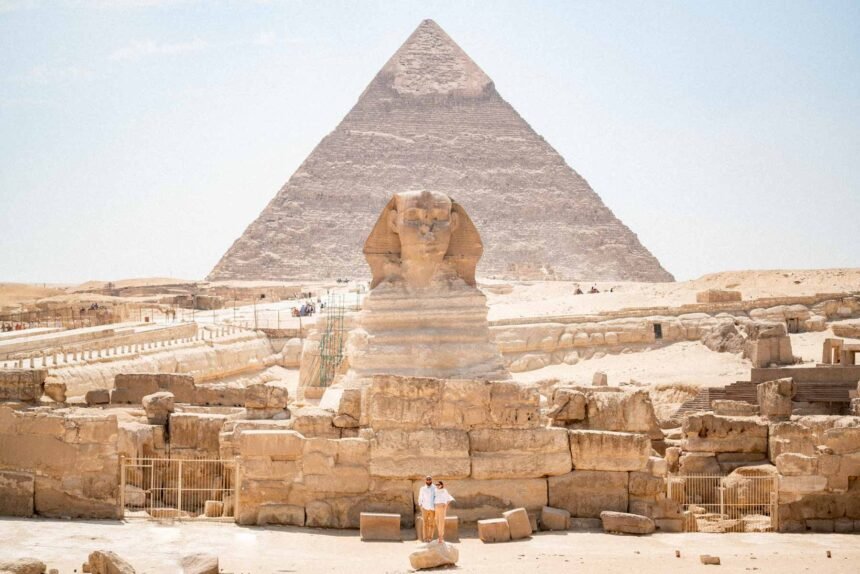
The Pyramids of Giza
I mean, obviously. The Pyramids of Giza are the reason most folks visit Egypt in the first place, and they absolutely deliver on the hype. The Great Pyramid is the last surviving wonder of the ancient world and standing at its base gives you a sense of scale that no photo can replicate. These structures were built over 4,500 years ago and they’re still standing there, defying logic and gravity, and hot damn if that isn’t humbling.
Here’s the catch, though. The experience of actually visiting the Pyramids was one of the most stressful parts of our trip. Within seconds of entering the complex we were swarmed by touts selling tours, camel rides, and trinkets. We were confronted by a man in civilian clothing claiming to be an official who demanded to see our camera. We got ripped off on a camel ride. We were followed by children asking for money. After 90 minutes, we called an Uber and left.
My advice: Visit the Pyramids with a pre-booked guided tour. Your guide will handle the touts and you’ll actually get to enjoy the experience instead of spending your energy fending off scammers. Also, go early in the morning when it’s slightly less chaotic. And skip the camel ride. Please. The animals are in rough shape and the operators are aggressive.
Karnak Temple (Luxor)
If the Pyramids are the showstopper, Karnak Temple is the hidden gem that blew us away even more. This massive temple complex in Luxor was built, expanded, and modified over 2,000 years by roughly 30 different pharaohs. Walking through the Great Hypostyle Hall — 134 columns towering 80 feet above you, each one covered in hieroglyphics — is an experience I will never forget.
I remember looking up at those columns and getting genuine chills. The scale is absurd. The artistry is mind-blowing. And the fact that this was built thousands of years before modern engineering? I stood there with my mouth open like an absolute tourist and I didn’t care.
Karnak is the site that almost made me reconsider my stance on Egypt. Almost. Because about 20 minutes into our visit, a guard cornered us in one of the inner chambers and demanded a tip for “allowing” us to take photos (which were already included in the entrance fee). But for those first 20 minutes? Magic.

Valley of the Kings (Luxor)
The Valley of the Kings contains over 60 tombs, including the famous tomb of Tutankhamun (King Tut). Walking into these tombs and seeing wall paintings that are 3,000+ years old, still vibrant with color, is surreal. The craftsmanship and preservation are extraordinary.
A few things to know: your standard ticket gets you into three tombs. King Tut’s tomb requires a separate, more expensive ticket. Photography is technically not allowed in most tombs (though guards will offer to let you take photos for a tip, because of course they will). The valley itself is scorching hot with very little shade, so bring water and a hat.
Despite the usual hassles, the Valley of the Kings was one of the most profound experiences of the trip. Standing inside a 3,000-year-old burial chamber, surrounded by art that was never meant to be seen by anyone after the pharaoh was sealed inside? That’s the kind of thing that stays with you.
Luxor Temple
Luxor Temple sits right in the center of modern Luxor, which is surreal in itself — ancient columns rising up next to hotels and restaurants. It’s most spectacular at night when it’s lit up, and I’d actually recommend visiting after sunset if you can. The lighting transforms the entire complex into something ethereal.
One of the most fascinating aspects of Luxor Temple is that it contains layers of history from different eras — pharaonic carvings, Roman murals, and even a mosque built right into the structure. It’s a physical timeline of 3,500 years of civilization, stacked on top of itself. That’s pretty wild.

The Egyptian Museum (Cairo)
The Egyptian Museum in Cairo houses the largest collection of ancient Egyptian artifacts in the world, including King Tut’s golden death mask. The sheer volume of history crammed into this building is overwhelming in the best way.
That said, I was shocked by how poorly everything is maintained. Artifacts that should be behind climate-controlled glass were sitting in open cases. Visitors were touching thousand-year-old relics. The labels were faded and hard to read. It felt less like a world-class museum and more like a warehouse that someone had hastily organized.
The new Grand Egyptian Museum near the Pyramids has been under construction for years and is expected to eventually replace the old museum. If it’s open when you visit, that’s where I’d direct you. The collections deserve a facility that treats them with the reverence they’ve earned.
Abu Simbel
Abu Simbel is the temple complex that Ramesses II carved directly into a mountain face in southern Egypt, about a three-hour drive from Aswan. The four colossal statues guarding the entrance are 65 feet tall and absolutely jaw-dropping. Fun fact: the entire complex was relocated in the 1960s to save it from rising Nile waters during the construction of the Aswan High Dam. They literally cut the temple into blocks and moved it to higher ground. The engineering is almost as impressive as the original construction.
Most visitors do Abu Simbel as a day trip from Aswan, departing around 3am to arrive at sunrise. It’s a long drive through the desert, but the payoff is extraordinary. This is one site where the tourist hassle is noticeably lower than at the Pyramids or Karnak, likely because of its remote location.

The mosques of Islamic Cairo
We spent two days exploring Islamic Cairo, popping into mosques, and were genuinely surprised by how beautiful some of them are. The architecture, the tile work, the soaring domes — Cairo’s historic mosques are stunning and criminally underrated. They’re also free to enter (though you’ll need to remove your shoes and women should cover their hair).
What nobody tells you, though, is what the rest of Islamic Cairo looks like. We saw families eating beans from fly-infested bowls on the ground. We saw half-dead animals laying next to restaurants. This is the real Cairo — the city you’ll see if you ever leave the tourist bubble — and yet no one shares photos of it outside of the famous street market and mosques. Go figure.
The mosques are beautiful. The reality surrounding them is heartbreaking. Both things can be true at the same time, and pretending otherwise isn’t doing anyone planning a trip any favors.

The Bottom Line
The sites in Egypt are extraordinary. I can say that without reservation. The Pyramids, Karnak, Valley of the Kings, Abu Simbel — these are among the most incredible historical sites on Earth, and nothing I experienced during our trip changes that fact.
The problem isn’t the destination. It’s the journey. The scams, the harassment, the corruption, the constant feeling of being a walking wallet — that’s what ruins the experience for so many travelers, and it’s what ruined it for us. The sites deserve better than the country’s treatment of the people who travel to see them.
If you’re going, go with a guide, book through your hotel, and prepare yourself mentally for the chaos between the awe-inspiring moments. For our full unfiltered experience, read our honest review of visiting Egypt. And if you need practical prep tips, check out what we’d do differently.
I hope this helps, Antonina
More Egypt Guides
Frequently Asked Questions
The Pyramids of Giza are the obvious headliner and the last surviving wonder of the ancient world. However, Karnak Temple in Luxor genuinely surprised us even more. The 134 towering columns of the Great Hypostyle Hall, each carved with hieroglyphics, left us speechless. Both are must-sees if you make the trip.
Plan for at least 5-7 days to cover Cairo (Pyramids, Egyptian Museum) and Luxor (Karnak Temple, Valley of the Kings, Luxor Temple) at a comfortable pace. We strongly recommend no more than two sites per day, with hotel rest time between outings. If you want to include Abu Simbel, add another day.
The Pyramids themselves are extraordinary and genuinely awe-inspiring. The experience of visiting them, however, involves aggressive touts, overpriced camel rides, and scam attempts from the moment you enter the complex. Book a guided tour, go early in the morning, and mentally prepare for the chaos. The Pyramids are worth seeing, but go in with realistic expectations about the surrounding experience.